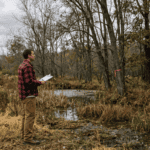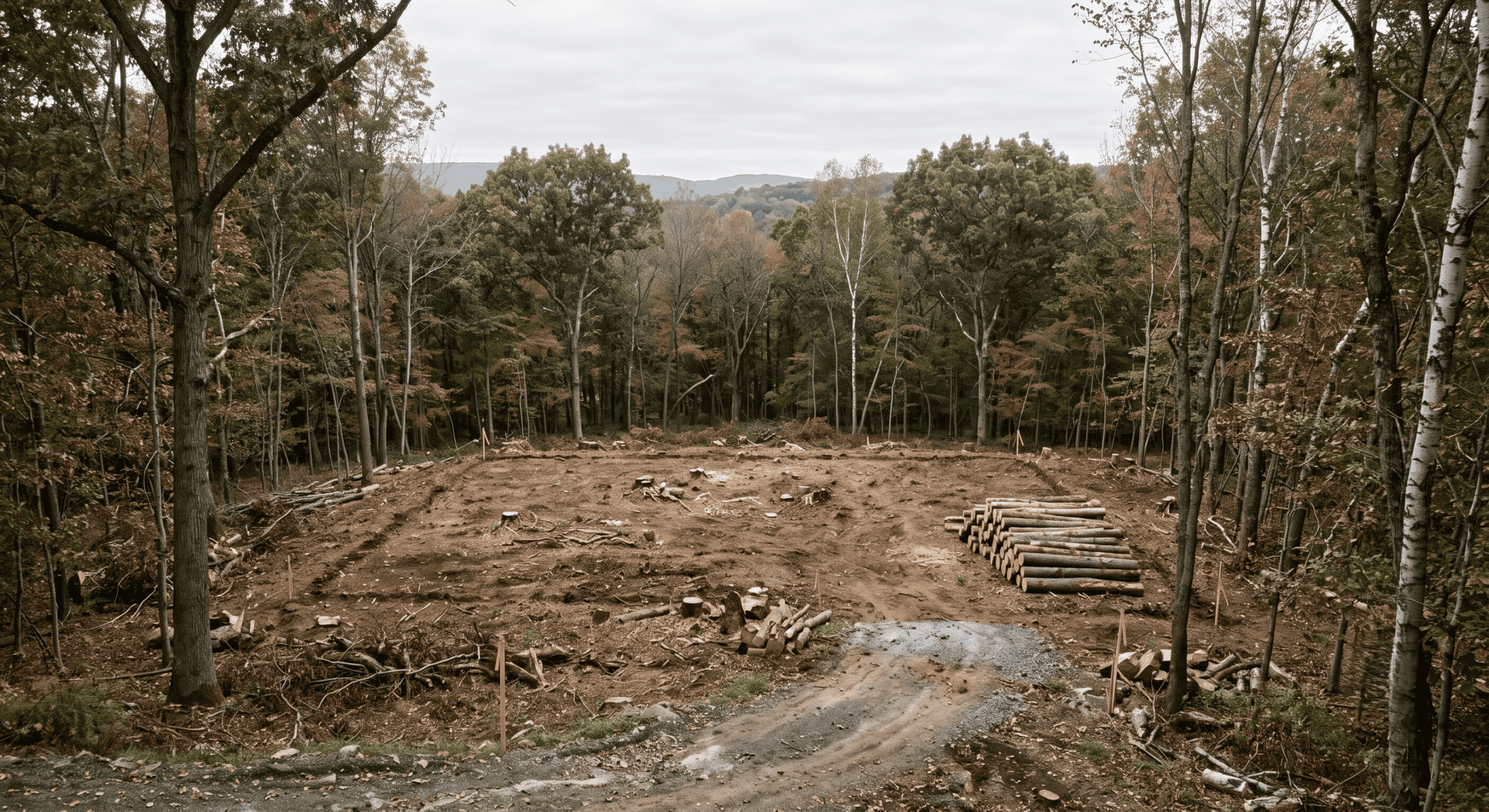
I’ve walked onto building sites where the owner already cleared three acres for a house that needed one. I’ve also seen the opposite: an owner who cleared too little and had to bring equipment back twice. Both cost more than getting it right the first time.
Clearing wooded land for a house isn’t just cutting down trees where the foundation goes. The house, the septic system, the driveway, and the stormwater rules all decide how much ground actually needs to open up.
Here’s how I walk landowners through that math before any equipment shows up.
How Much Land Actually Needs to Be Cleared to Build a House?
The house footprint is the smallest part of the equation. Your total cleared area also has to account for the septic system and its expansion area, the driveway, grading for drainage, and construction access room for equipment.
Most of the properties I clear for construction end up opening more ground than the house itself needs. That’s normal. It’s not overclearing — it’s the septic field, the driveway, and the working room a construction crew actually needs. Our land clearing team plans the footprint around all four pieces, not just the house.
What Determines the Size of Your Building Envelope?
Your building envelope is the total area you can build, clear, and disturb on a lot, and local zoning sets its outer limits. Setbacks from property lines, road frontage requirements, and any environmental buffers on your parcel all shrink that envelope. [Specific zoning setback distances TK — vary by town; Henry confirms per project.]
I always check the envelope before recommending a clearing plan. A wooded lot can look wide open on a walk-through and still have a tight legal building area once setbacks are drawn in.
Does My Septic System Affect How Much Land Gets Cleared?
Yes, often more than people expect. New York septic systems are governed by the state’s Appendix 75-A wastewater treatment standards, which set minimum separation distances between septic system components and buildings, property lines, wells, and waterbodies.
One distance is confirmed directly in the state standard: the wastewater treatment system must sit at least 10 feet from any water service line, including a residential well’s water line. Beyond that, Appendix 75-A sets a full table of separation distances for tanks, absorption fields, and other components. [Full separation distance table TK — Henry confirms exact figures per site and county health department before publish, since counties can require distances stricter than the state minimum.]
Appendix 75-A also requires setting aside an additional expansion area equal to half the size of the primary absorption field, for future repair or replacement. That expansion area needs to stay clear too, even if you never build on it.
Do I Need a Stormwater Permit Before Clearing for Construction?
Yes, if your project disturbs one acre or more of land. New York requires coverage under the NYSDEC SPDES General Permit for Stormwater Discharges from Construction Activity for any construction activity meeting that threshold.
You need this permit coverage before construction starts, not after. It requires a Stormwater Pollution Prevention Plan, and NYSDEC can also require coverage for smaller sites in specific circumstances, including some sites under one acre in certain watersheds. [Site-specific applicability TK — Henry confirms against current site plan and acreage before clearing begins.]
Some smaller residential lots stay under the one-acre threshold and skip this requirement entirely. Don’t assume that without checking your actual disturbed area first, since the septic field, driveway, and grading all count toward that acre, not just the house footprint.
What About the Driveway?
The driveway is often the most overlooked piece of the clearing plan. A long or curved driveway on a wooded lot can clear more ground than the house itself.
I look at driveway length, turning radius for emergency and delivery vehicles, and grading needs before finalizing a clearing plan. On sloped properties, the driveway grade sometimes drives more tree removal than the building envelope does.
Should I Clear More Than the Footprint Now, or Wait?
I generally recommend clearing the septic area, driveway, and building envelope together in one pass, rather than in stages. Bringing equipment back a second time for an area you should have cleared the first time costs more than clearing it up front.
I don’t recommend clearing beyond what your approved plans require. Extra clearing removes tree cover you might want for privacy or wind protection, and it’s ground you’ll eventually have to landscape or maintain. Our land clearing services plan to the approved footprint, not past it.
What Happens to the Trees I Clear?
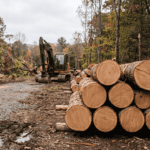
That depends on what’s standing on the lot. If there’s merchantable timber in the clearing area, it’s often worth having it assessed before the clearing starts, rather than piled and burned with the rest of the debris.
I cover this in more detail in a separate article on recovering timber value when you clear land — link to come once that piece publishes. On a building lot with mature hardwoods, that assessment can change the economics of the whole project.
Frequently Asked Questions
How much land do I need to clear to build a house?
More than just the house footprint. Your cleared area also needs to cover the septic system and its expansion area, the driveway, and grading for drainage and construction access.
Do I need a permit to clear land for a septic system?
Septic system design in New York follows Appendix 75-A, which sets required separation distances from wells, property lines, and buildings. Your county health department issues the actual installation permit and can require distances stricter than the state minimum.
Do I need a stormwater permit to clear land for a house?
Yes, if your total disturbed area reaches one acre or more. New York requires SPDES General Permit coverage for construction activity at that threshold, and coverage must be in place before construction starts.
Should I clear my whole lot before building?
No, I generally recommend clearing only the approved building envelope, septic area, and driveway. Clearing beyond that removes tree cover you may want to keep, and it adds land you’ll need to landscape or maintain later.
How Environmental Forest Products Can Help
I’ve planned building-site clearing across Sullivan, Orange, and Ulster Counties for over 30 years. I look at the house, the septic system, the driveway, and the permit requirements together, before recommending what to clear.
If there’s merchantable timber on your lot, I’ll also tell you whether it’s worth recovering before the clearing starts.
Learn more about our land clearing services, or request an estimate to get started.
Call (845) 754-8242 or email henry@eforestproducts.com. I serve landowners throughout Sullivan, Orange, and Ulster Counties, NY, plus Pike and Wayne Counties, PA, and Sussex County, NJ.
Henry Kowalec is a licensed consulting forester and member of the Society of American Foresters with over 30 years serving private landowners in the Hudson Valley and Catskills. Environmental Forest Products | Westbrookville, NY 12785 | Licensed in NY, PA, NJ.