A small woodlot managed well is worth far more than a large one managed poorly. Here is what I tell every landowner who calls me about their back forty.
I get a version of this call every spring. A landowner has 20 or 30 acres of woods. They want to “do something with it” — maybe cut some timber, maybe clean it up, maybe just figure out what they have. They’re not sure where to start. And they’re worried about making a mistake they can’t undo.
That worry is legitimate. I’ve walked properties where a single bad timber sale took out 30 years of growth in a week. I’ve also seen small woodlots that have been thoughtfully managed for decades — and they are genuinely beautiful, productive, and valuable pieces of land.
The difference is almost always whether the landowner had a plan before anyone picked up a chainsaw. This article covers the core decisions in small woodlot management — what to do, what to avoid, and how to protect the long-term value of land you worked hard to own.
What Does “Managing” a Small Woodlot Actually Mean?
Most landowners picture timber harvesting when they hear “woodlot management.” That’s one tool. It’s not the whole job.
Woodlot management means making deliberate decisions about which trees grow, how fast they grow, what species make up the stand, and what happens to the land between harvests. It includes controlling invasive plants, managing for wildlife, protecting soil and water, and planning for the next generation of trees — not just the current one.
On a small property, every decision carries more weight. A 20-acre woodlot doesn’t have room for big mistakes. Cutting the wrong trees, skipping invasive control, or selling timber without a plan can set that land back by decades. I walk properties like this every week across Sullivan, Orange, and Ulster Counties, and the pattern is consistent: the well-managed small woodlots are the ones where someone thought ahead.
Managing a small woodlot well doesn’t require constant work. It requires the right work at the right time. That starts with knowing what you have.
Step One: Understand What’s Growing on Your Land
Before you make any decisions, you need an honest inventory of your woodlot. I don’t mean a rough guess. I mean walking the property systematically and recording what’s there.
What I look for on an initial property assessment:
- Dominant tree species and their approximate size and age
- Stand structure — are there multiple age classes, or is it all one generation?
- Regeneration — are native seedlings and saplings coming up in the understory?
- Invasive species presence and extent
- Signs of deer browse pressure on new growth
- Any existing timber, water, or boundary issues
This inventory is the foundation of a forest management plan. Without it, you’re guessing. With it, every dollar you spend on your woodlot goes to the right place. For landowners in New York, a formal management plan also opens the door to the 480-a Forest Tax Law — which can cut your property tax bill by 80% on qualifying acreage.
How to Set Goals for Your Woodlot Before You Do Anything Else
I ask every landowner the same three questions before I recommend any management work:
What do you want this land to do for you? Generate income from timber? Provide deer and turkey habitat? Protect a watershed? Leave something for your children? These aren’t competing goals — but they do lead to different decisions. A woodlot managed primarily for timber looks different from one managed primarily for wildlife.
What’s your time horizon? Are you planning to be on this land for five years or fifty? A landowner who wants income in the next few years has different options than one who’s thinking generationally.
What’s your risk tolerance? Timber markets move. A harvest that makes sense this year may not have made sense five years ago. I explain this to every landowner who calls about selling timber — knowing your options before you commit is the only way to negotiate from a position of strength.
Answering these questions honestly takes 20 minutes. Skipping them costs years.
The Most Damaging Mistake Small Woodlot Owners Make
I’ll say it plainly: selling timber without a professional appraisal and a management plan is the single most damaging mistake small woodlot owners make.
A timber buyer’s job is to buy timber at the lowest price that closes the deal. That’s not a criticism — it’s their business model. But their interests and your interests are not aligned. They are not thinking about your woodlot in 20 years. You need someone in your corner who is.
What I see regularly on properties that had unplanned harvests:
- High-grading — the best trees removed, leaving the worst to reproduce and dominate the next stand
- Logging damage to residual trees and future crop trees
- Skid trail erosion that took years to stabilize
- Invasive plants spreading rapidly along opened trails and gaps
- A landowner who received far less than fair market value for their timber
A licensed consulting forester prepares a timber appraisal, marks the trees to cut, supervises the harvest, and holds the logger accountable to a signed contract. That service typically pays for itself many times over in the value it protects — and in what it prevents.
Timber Stand Improvement on Small Properties
Not every woodlot management decision involves a timber sale. Timber stand improvement (TSI) is work done to improve stand quality without a commercial harvest — and it’s often the most important work on a small property.
TSI on a small woodlot typically means:
- Identifying the 50 to 80 best crop trees per acre and releasing them from competition
- Cutting or girdling suppressed trees that are crowding good stems without adding value
- Removing forked, diseased, or low-form trees that won’t improve
- Creating small canopy openings to let light reach the forest floor and stimulate regeneration
On a 20-acre woodlot, a single day of focused TSI work can meaningfully accelerate the growth of your best trees and improve stand structure for decades. The cost is modest. The return — in timber value, wildlife habitat, and long-term stand health — is substantial.
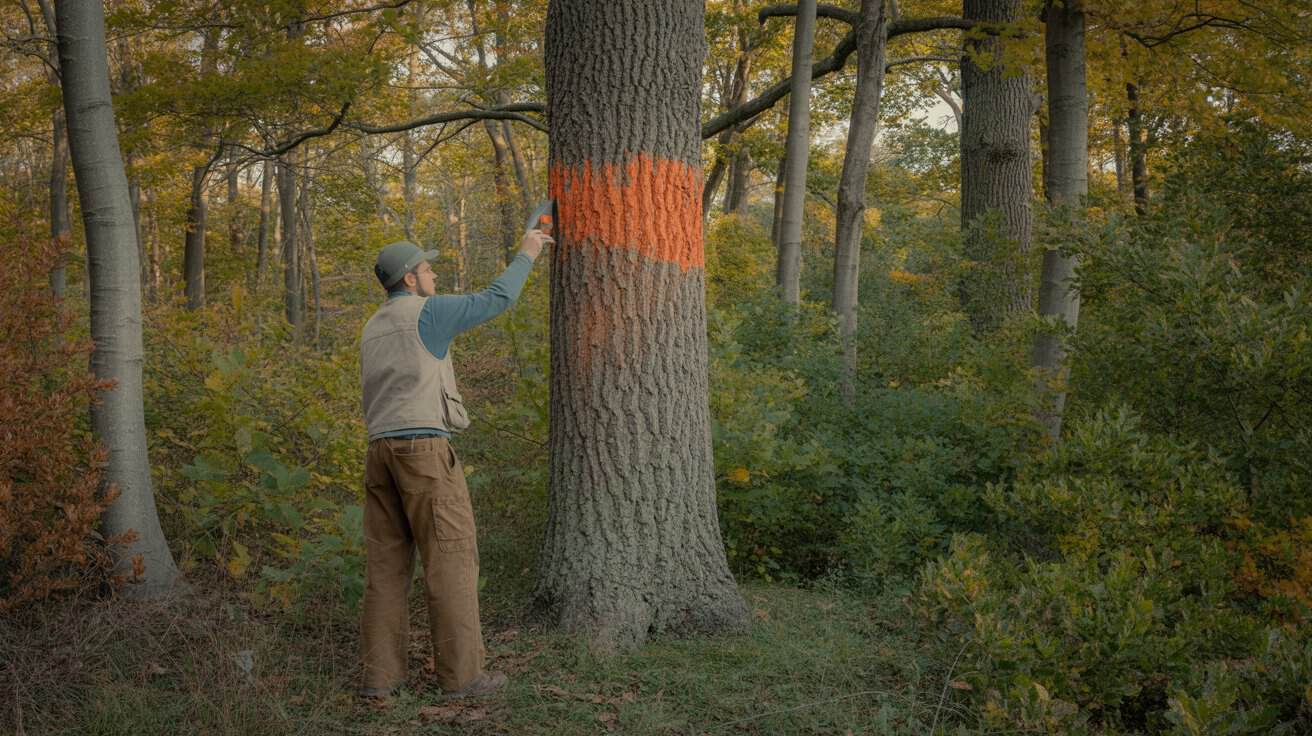
I do TSI marking on small properties across the region. I show landowners exactly which trees to cut and why. Many do the cutting themselves with a chainsaw. Others hire a logger for the day. Either way, having a forester mark the work first makes all the difference.
Invasive Plant Control on Small Woodlots
A small woodlot is not automatically easier to manage than a large one. In my experience, small properties often have worse invasive plant problems — because they tend to be closer to roads, field edges, and disturbed ground where invasives establish first.
The invasive species I encounter most often on small woodlots in this region:
- Japanese barberry — spread by birds, nearly impossible to remove by hand once established, creates prime tick habitat
- Multiflora rose — forms dense, impenetrable thickets that crowd out native regeneration
- Asiatic bittersweet — a vine that climbs and eventually kills mature trees
- Garlic mustard — an early colonizer after disturbance, spreads aggressively in partial shade
The window to act is early. A small patch of Japanese barberry can be controlled with targeted herbicide treatment. A 5-acre infestation requires a multi-year program and significant expense. I’ve seen landowners lose control of their understory entirely because they waited too long.
If you haven’t walked your woodlot recently looking for invasives, that walk is overdue.
How Often Should You Have a Forester Walk Your Property?
For most small woodlots, a formal forester visit every three to five years is sufficient — with a phone check-in in between if conditions change. A major storm, a pest outbreak, or a neighbor’s timber sale can all change what your land needs.
The properties I worry about are the ones I haven’t seen in a decade. A lot can change in ten years. Invasives spread. Deer pressure shifts. Markets move. Trees that were good candidates for harvest five years ago may have grown into something worth significantly more today — or may have declined from a pest or disease problem that could have been caught early.
Regular professional eyes on your woodlot is not an expense. It’s the cheapest form of protection your land has.
Frequently Asked Questions
How many acres do I need to justify hiring a forester for woodlot management?
There’s no minimum. I’ve worked on properties as small as 10 acres where professional management made a clear financial and ecological difference. On a small woodlot, the stakes per acre are actually higher — there’s less margin for error. If you own wooded land and you’re not sure what you have or what to do with it, a professional assessment is worth the cost at any size.
Can I manage my own woodlot without any professional help?
You can do some things yourself — removing small invasives, building brush piles, protecting individual seedlings. But marking timber for harvest, preparing a management plan, and making stand-level decisions about which trees to keep and which to cut requires training and experience. A single bad cutting decision on a small property can affect it for 30 to 50 years. The cost of a forester is small compared to that risk.
What’s the difference between a timber buyer and a consulting forester?
A timber buyer represents the mill or logging operation. Their goal is to buy your timber at the best price for their business. A consulting forester represents you. My job is to protect your land and your financial interests — before, during, and after any harvest. I prepare the appraisal, mark the cut, write the contract, and supervise the job. Those are different roles with opposite incentives.
How do I know if my small woodlot qualifies for New York’s 480-a tax program?
The basic requirements are 50 contiguous acres of forest land and an approved management plan prepared by a licensed forester. If your property doesn’t reach 50 acres on its own, adjacent parcels under the same ownership can be combined. The 80% reduction in assessed value makes 480-a one of the most valuable programs available to woodlot owners in New York. I’m licensed to prepare 480-a plans and can tell you quickly whether your land qualifies.
How Environmental Forest Products Can Help
Managing a small woodlot well is not complicated — but it does require knowing what you’re doing before you start. I work with private landowners across Sullivan, Orange, and Ulster Counties in New York and into Pike and Wayne Counties in Pennsylvania and Sussex County in New Jersey.
Here’s what I can do for your woodlot:
- Property assessment and forest inventory — understand exactly what you have
- Forest management plan — a written plan that guides every decision and satisfies 480-a requirements
- Timber stand improvement marking — identify the right trees to cut and the right ones to keep
- Timber appraisal and harvest supervision — protect your timber value when it’s time to sell
- Invasive species assessment — know what’s there and what to do about it
The first step is a conversation. Visit my woodlot management services page to see how I work — or call me directly.
📞 (845) 754-8242
✉️ henry@eforestproducts.com
📍 Westbrookville, NY 12785
Serving Sullivan, Orange, and Ulster Counties NY | Pike and Wayne Counties PA | Sussex County NJ
Henry Kowalec is a licensed consulting forester and member of the Society of American Foresters with over 30 years serving private landowners in the Hudson Valley and Catskills. Environmental Forest Products | Westbrookville, NY 12785 | Licensed in NY, PA, NJ.