If you own wooded land in Sullivan, Ulster, or Orange County, your forest is fighting a battle right now — and it may be losing. Here is what to do about it.
Most landowners I visit haven’t walked their back acres in years. When they finally do, they’re surprised. The deer are thick, the invasives are spreading, and the big trees look thin in the crown. The forest isn’t dying overnight. But it is changing — and not for the better.
An unhealthy forest doesn’t just look bad. It loses timber value, loses wildlife habitat, and becomes harder and more expensive to manage every year you wait. I’ve seen woodlots that were solid stands of oak and hickory turn into near-impenetrable mats of Japanese barberry inside a decade of neglect.
This article covers the most practical steps private landowners can take to improve forest health — based on what I see on properties across the Hudson Valley and Catskills every week.
What Does a Healthy Forest Actually Look Like?
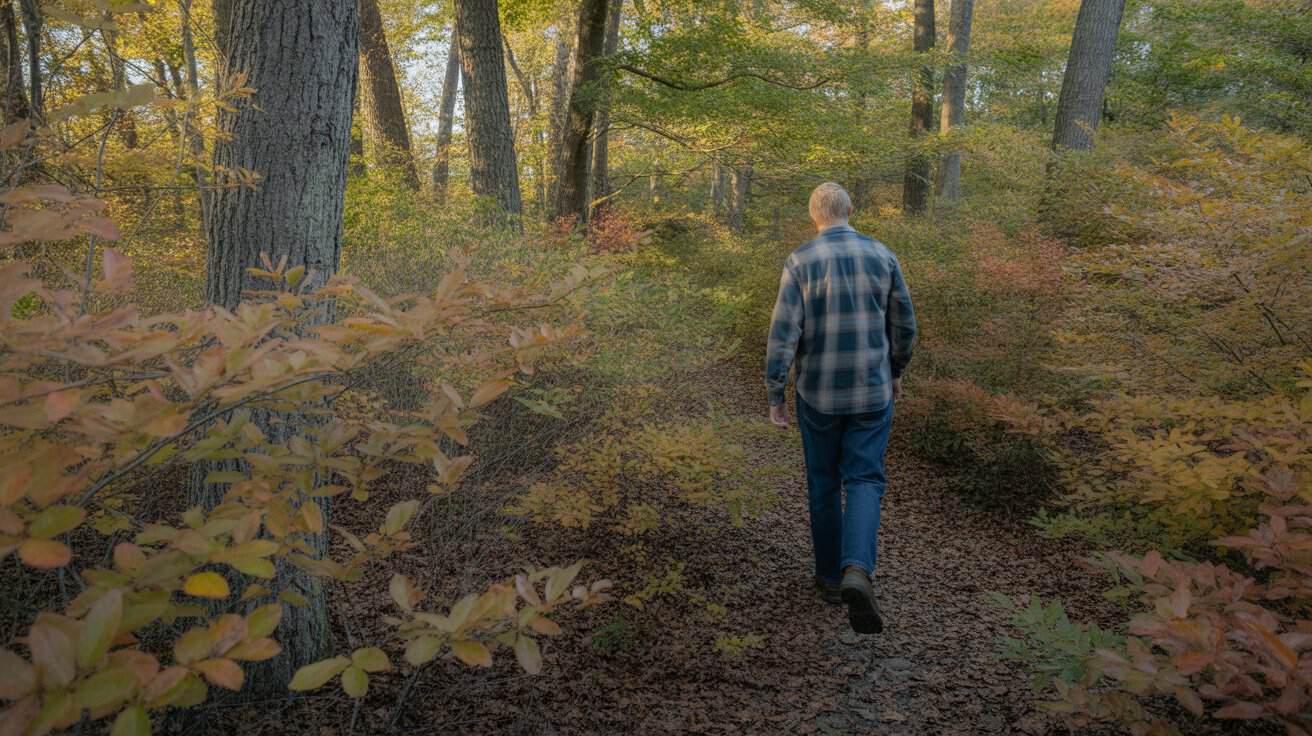
A healthy forest has trees of different ages and sizes growing together. It has a mix of species — not just one or two. There’s a shrub layer and a ground layer, both alive with native plants. Sunlight reaches the forest floor in patches.
When I walk a healthy woodlot, I find regeneration. Young trees — seedlings and saplings — are coming up in the gaps. That’s the next forest growing under the current one.
On unhealthy land, I see the opposite. A single-age stand of trees with nothing coming up underneath. A shrub layer dominated by invasive species like Japanese barberry, multiflora rose, or Asiatic bittersweet. Heavy deer browse that’s wiped out every native seedling for years.
The most common thing I find on unmanaged land in Sullivan County is a closed canopy with no regeneration and an invasive shrub layer at shoulder height. The landowner often describes it as “mature woods.” I see a forest that has stopped replacing itself.
Step One: Get a Forest Management Plan
I’m going to say this plainly: you cannot improve what you haven’t measured. A forest management plan is the foundation of everything else on this list.
A management plan identifies what you have — species composition, timber volume, stand age, wildlife habitat features — and maps out what actions make sense for your goals. It gives you a written record that satisfies requirements for programs like New York’s 480-a forest tax law.
Without a plan, landowners guess. They cut the wrong trees, skip the right treatments, and spend money in the wrong places. With a plan, every dollar goes where it does the most good.
If you don’t have a current management plan for your property, that’s the first call to make. Visit our woodlot management services page to see how I put these plans together.
How to Control Invasive Plants in Your Woodlot
Invasive plants are the single biggest threat to forest health on private land in the Northeast. I walk properties all over Sullivan, Ulster, and Orange Counties. Almost every one has an invasive problem. Most landowners underestimate how bad it is.
Japanese barberry is my biggest concern right now. It’s a dense, thorny shrub that shades out native ground cover, raises soil pH, and creates tick habitat. It’s extremely difficult to remove once established. I’ve seen it take over 40 acres of what was once healthy forest understory.
Other species I find regularly on properties here:
- Multiflora rose
- Asiatic bittersweet
- Garlic mustard
- Japanese knotweed
- Tree of heaven (Ailanthus altissima)
Control methods depend on the species and how widespread it is. Mechanical removal works on small infestations. Herbicide treatment is often necessary for established patches. The key is treating before the seed bank builds up further. Every year of delay means more ground to cover.
Managing Deer Browse Pressure
Deer are the other major obstacle to forest regeneration in this region. In Sullivan and Ulster Counties, deer populations have been high for years. On many properties, deer have browsed off every native tree seedling within reach for 10 to 15 years running.
The result is a forest that looks fine on the surface but has no next generation coming up. When the big trees die or come down in a storm, there’s nothing to replace them.
If your property has a deer browse problem, you have a few options:
- Work with a licensed hunter or hunting club to increase harvest pressure
- Use tree shelters or wire cages to protect high-value seedlings in key areas
- Focus regeneration efforts in small fenced exclosures to establish a seed source
A management plan will flag whether browse pressure is limiting regeneration on your land. This is something I document during every property assessment.
Timber Stand Improvement: Cutting for Forest Health
Timber stand improvement (TSI) is a broad term for silvicultural work done to improve the quality and health of a forest stand — not primarily to sell timber. It’s one of the most powerful tools a landowner has.
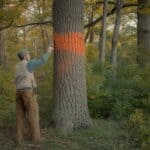
TSI work includes releasing crop trees from competition, removing low-quality “wolf trees” that shade out better stems, and girdling or cutting suppressed trees that are taking up space without producing timber or mast value.
I use TSI on almost every property I manage. When done right, a single day of TSI work can dramatically improve the growth rate and quality of the best trees in a stand. Those trees grow faster, produce more mast for wildlife, and are worth more at harvest.
TSI is also how you create structural diversity — the multiple layers and age classes that define a healthy, resilient forest. Releasing a gap in the canopy lets sunlight hit the forest floor. That light is what triggers regeneration.
Improving Wildlife Habitat as Part of Forest Health
A biologically diverse forest is a healthy forest. Wildlife habitat improvement and timber management are not opposites — they work together when the forest is managed thoughtfully.
Specific habitat improvements I recommend to landowners regularly:
- Retain snags (standing dead trees) where it’s safe to do so — they’re critical for cavity-nesting birds and bats
- Create or maintain brush piles from slash left after timber work — grouse, rabbits, and dozens of songbird species use them
- Identify and protect mast-producing trees — oaks, beeches, and hickories are the foundation of wildlife nutrition in this region
- Establish small forest openings to create edge habitat and promote native ground cover
These are not expensive interventions. Most of them cost nothing beyond planning and intention. They pay back in wildlife populations and forest diversity for decades.
The Role of Prescribed Fire and Other Tools
Prescribed fire is underused on private land in New York — partly because of permit requirements, partly because of the learning curve. But in the right situation, a low-intensity burn is one of the best tools for knocking back invasive shrubs and stimulating native ground cover.
I don’t recommend prescribed fire as a first step for most landowners. It requires planning, permits from the NYSDEC, the right conditions, and experienced execution. But on large properties with persistent invasive problems, it belongs in the conversation.
Other tools that support forest health improvement:
- Soil testing and limited fertilization in specific stand conditions
- Stream buffer management to protect water quality and riparian habitat
- Road and skid trail maintenance to prevent erosion and invasive spread
Frequently Asked Questions
How do I know if my forest is unhealthy?
Walk through your woodlot and look at the ground layer. If you see dense invasive shrubs and no native seedlings coming up, your forest is not regenerating. Other signs include trees with dead tops, widespread dieback in the canopy, and a single-age stand with no variation in tree size. A licensed forester can assess your property and tell you exactly what you’re dealing with.
Do I need a forester to improve my forest, or can I do it myself?
Landowners can handle some work themselves — removing small invasive plants, building brush piles, or protecting individual seedlings with tree shelters. But anything involving timber stand improvement, herbicide application at scale, or management plan development requires professional help. Mistakes in the woods can take decades to undo. A forester helps you spend money where it counts and avoid costly errors.
How much does it cost to improve forest health on my property?
It depends entirely on what the forest needs. A management plan assessment typically runs a few hundred dollars for a small property and scales with acreage. TSI work, invasive control, and other treatments vary based on extent and method. In many cases, a qualifying timber harvest can generate revenue that offsets management costs. I discuss costs and options honestly when I walk a property — there’s no obligation.
Can I use New York’s 480-a program to offset forest management costs?
Yes. New York’s 480-a Forest Tax Law provides an 80% reduction in assessed value for qualified forest land — and it requires an approved management plan and documented management activities. Improving your forest health and qualifying for 480-a go hand in hand. Most of the work you’d do anyway counts toward the program’s requirements. I’m licensed to prepare 480-a management plans in New York.
How Environmental Forest Products Can Help
I work with private landowners across Sullivan, Orange, and Ulster Counties — and into Pike and Wayne Counties in Pennsylvania and Sussex County in New Jersey. Every property is different. My job is to walk your land, understand your goals, and give you a clear plan.
Services relevant to forest health improvement:
- Forest management plans — written assessments with action priorities and 480-a compliance
- Woodlot management — TSI, invasive management, and ongoing stand work
- Timber appraisal — know what you have before you cut or sell anything
- Forest stewardship consulting — one-time property walks and ongoing advisory relationships
The first step is a property assessment. Request an estimate here — or call me directly.
Call: (845) 754-8242
Email: henry@eforestproducts.com
Location: Westbrookville, NY 12785
Serving Sullivan, Orange, and Ulster Counties NY | Pike and Wayne Counties PA | Sussex County NJ
Henry Kowalec is a licensed consulting forester and member of the Society of American Foresters with over 30 years serving private landowners in the Hudson Valley and Catskills. Environmental Forest Products | Westbrookville, NY 12785 | Licensed in NY, PA, NJ.