Most landowners who call me think logging is logging. You either cut trees or you don’t. That’s not how it works — and that misunderstanding costs people money and forest health every year.
Selective timber harvesting is a specific practice. Done right, it improves your forest while generating income. Done wrong — or confused with a lookalike practice called diameter-limit cutting — it quietly ruins your woodlot for decades.
Here’s what selective harvesting actually is, how it works, and why the difference matters if you own wooded land in Sullivan, Ulster, or Orange County.
What Is Selective Timber Harvesting?
Selective timber harvesting is a silvicultural method. You remove individual trees — or small groups — based on their role in the forest, not just their size.
The goal is to favor your best trees. You remove trees that are competing with high-quality crop trees. Take out dying, diseased, or poorly formed stems. You open the canopy just enough to let light reach the next generation.
What you leave behind matters as much as what you cut. A well-executed selective harvest improves the species composition of your stand. It accelerates growth in the trees worth keeping. And it protects the forest structure that supports wildlife, water quality, and long-term timber value.
This method falls under what foresters call uneven-aged management. Trees of different ages and sizes grow together. Each harvest cycle — typically every 10 to 20 years — removes mature timber and releases younger trees. The forest is never stripped bare. It keeps working for you between cuts.
Learn more about the full range of harvesting approaches in my complete guide to timber harvesting for private landowners.
How Selective Harvesting Differs from Diameter-Limit Cutting
This is where most landowners get burned. Diameter-limit cutting looks like selective harvesting. It is not.
In a diameter-limit cut, a logger takes every tree above a certain size — say, every oak over 16 inches. It sounds reasonable. You keep the small trees. You let them grow.
The problem: you just removed all your best trees. What’s left are the trees that weren’t worth cutting — poor form, low quality, suppressed growth. The forest regenerates from those genetics. Twenty years later, you have a worse stand than you started with.
I’ve walked properties after diameter-limit cuts that were sold to landowners as “selective logging.” The damage is real. It doesn’t look dramatic right away, but the timber value and forest quality decline for a generation.
True selective harvesting targets trees based on their silvicultural role — not just their size. That requires a trained eye and a written prescription. It cannot be done by a logger working on instinct with a per-thousand-board-foot contract.
What Selective Harvesting Actually Does for Your Forest
When I mark a selective harvest, I’m thinking about what the stand will look like in 15 years — not just what the log trucks haul out today.
A properly marked selective harvest does several things at once:
- Removes trees with defects, disease, or poor form before they deteriorate further
- Releases high-quality crop trees from direct competition
- Creates canopy openings that stimulate natural regeneration of desirable species
- Generates timber income without liquidating your long-term asset
- Maintains habitat structure for wildlife — especially cavity trees and mast producers
In Sullivan County, I often find that unmanaged woodlots are dominated by low-value species — red maple, gray birch, and ironwood crowding out oak, cherry, and ash. A selective harvest is the tool that shifts that balance. You can’t do it with a chainsaw and a wish. You need a marked prescription and a logger who will follow it.
When Selective Harvesting Makes Sense — and When It Doesn’t
Selective harvesting works best in mixed hardwood stands with trees of varying ages and sizes. That describes most private woodlots in the Hudson Valley and Catskills.
It works well when:
- Your stand has mature timber mixed with younger trees worth developing
- You want income now without liquidating your forest asset
- You’re enrolled in New York’s 480-a Forest Tax Law and need a managed harvest to stay in compliance
- You have wildlife or aesthetic goals alongside timber production
Selective harvesting is not always the right prescription. Some stands are so degraded — heavily deer-browsed understories, invasive shrub layers — that a more intensive treatment is needed first. Some species, like aspen, regenerate better with a clearcut or shelterwood. A good forester tells you which method fits your land, not the one that’s easiest to explain.
Why You Need a Forester, Not a Logger, to Plan It
A logger’s job is to cut and haul timber efficiently. That’s an honest living and a necessary one. But a logger is not trained to evaluate your stand’s long-term silvicultural needs. They are not required to be.
A consulting forester works for you — not for the mill. My job is to mark the trees, write the prescription, and oversee the harvest to make sure what was agreed on is what actually happens on the ground.
I’ve seen what happens when landowners skip this step. The logger takes the best trees. The slash is left in the wrong places. The skid trails aren’t seeded. The residual stand is damaged, and the landowner has no recourse.
When I manage a selective harvest, I’m on-site. I check the work. I make sure the contract terms are met. That oversight is what protects the value of your forest — and your next harvest 15 years from now.
You can learn more about working with a consulting forester on the Environmental Forest Products timber harvesting services page.
Frequently Asked Questions
Does selective harvesting damage the forest?
Any logging operation causes some disturbance — skid trails, slash, soil compaction in wet areas. A well-planned selective harvest minimizes that damage and produces net long-term benefit. A poorly planned one, or one without forester oversight, can cause serious harm. The prescription and the oversight are what separate the two outcomes.
How do I know which trees to cut in a selective harvest?
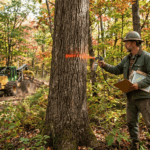
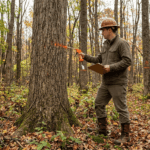
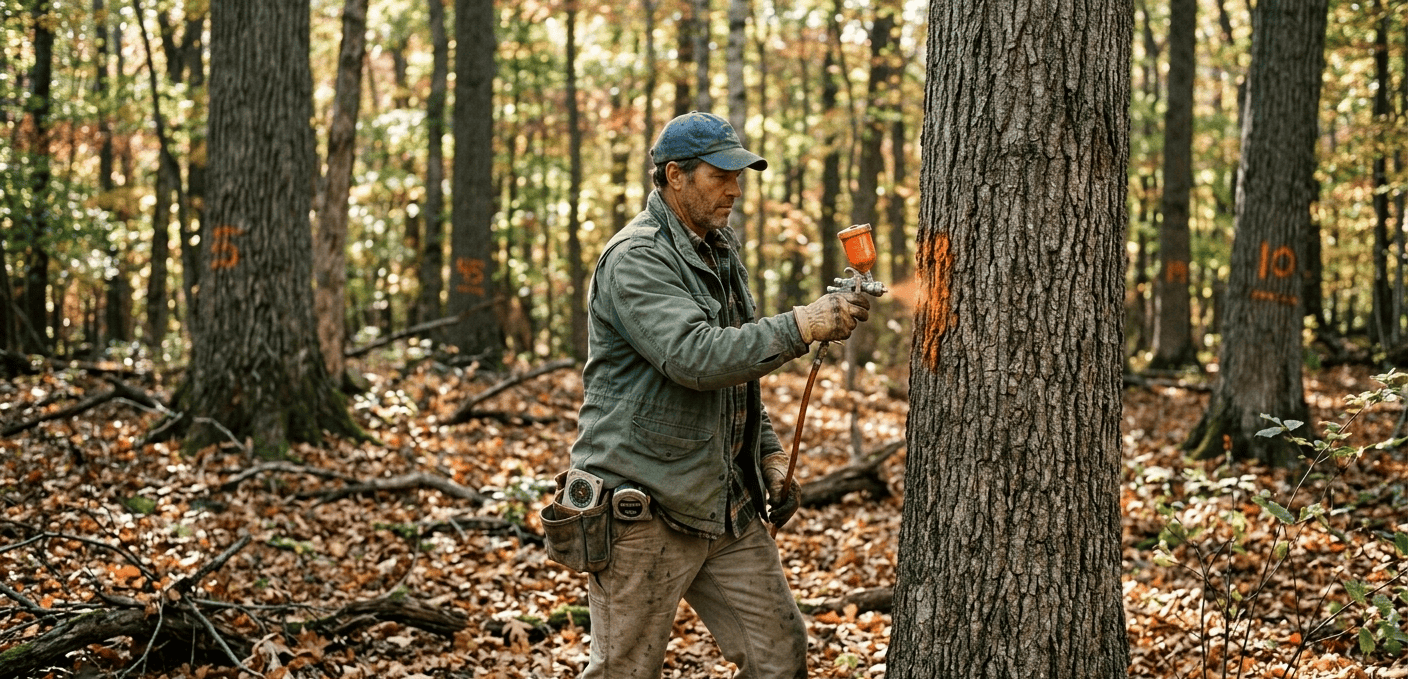
You don’t — and that’s the point. Tree marking requires evaluating crown position, stem quality, species value, competition relationships, and regeneration goals for each marked tree. That’s a trained forester’s work. I walk the stand, mark with paint, and write a prescription before a logger ever sets foot on your property.
Can I do a selective timber harvest without a forest management plan?
You can harvest without a plan, but you probably shouldn’t. If you’re enrolled in New York’s 480-a Forest Tax Law, a management plan is required and harvests must conform to it. Even outside 480-a, a management plan gives your harvest a clear silvicultural goal. Without one, you’re cutting trees without a strategy — and that usually means leaving money and forest health on the table.
How Environmental Forest Products Can Help
I’ve been marking and overseeing selective timber harvests across Sullivan, Ulster, and Orange Counties for over 30 years. I work as your forester — not the logger’s forester, not the mill’s forester. Yours.
Here’s what I can do for your property:
- Walk your woodlot and evaluate what type of harvest — if any — makes sense right now
- Mark trees, write a harvest prescription, and manage the bidding process
- Oversee the harvest to make sure the contract is followed
- Integrate the harvest into a forest management plan for long-term stewardship
- Advise on 480-a Forest Tax Law enrollment if you’re not already in the program
If you own wooded land in Sullivan, Ulster, or Orange County — or in Pike County or Wayne County PA, or Sussex County NJ — I’m available to walk your property and give you a straight answer about what it needs.
Request a Free Timber Harvest Consultation
Call me directly: (845) 754-8242
Email: henry@eforestproducts.com
Serving Sullivan County NY, Ulster County NY, Orange County NY, Pike County PA, Wayne County PA, and Sussex County NJ.
Henry Kowalec is a licensed consulting forester and member of the Society of American Foresters with over 30 years serving private landowners in the Hudson Valley and Catskills. Environmental Forest Products | Westbrookville, NY 12785 | Licensed in NY, PA, NJ.