A healthy forest and productive wildlife habitat are the same thing. When landowners understand that, everything about how they manage their land changes — for the better.
I walk properties across Sullivan, Ulster, and Orange Counties every week. Some of those properties are in excellent shape — structurally diverse, regenerating well, with a functioning native understory and evidence of wildlife throughout. Most, though, have problems that have built up over years or decades of neglect, unmanaged deer pressure, invasive species spread, or poorly planned timber work.
The landowners who call me fall into two camps. Some have noticed specific problems — a stand that’s stopped regenerating, an understory full of invasives, a timber sale that left the woods worse than before. Others have a general sense that something is off, but they can’t name it. Either way, the answer starts in the same place: understanding what a healthy forest actually looks like, and what’s preventing yours from getting there.
This guide covers forest health and habitat improvement from the ground up — what drives forest health, what degrades it, and the specific practices that private landowners can use to improve both the ecological function and the wildlife value of their woodland, starting today.
What Forest Health Actually Means
Forest health is not simply the absence of dead trees. A forest can look fine from the road and be in serious trouble. And a forest with some dead wood, open gaps, and a patchy canopy may be among the healthiest ground I walk all year.
Forest health means the forest is functioning — growing, regenerating, cycling nutrients, filtering water, and producing the food and cover that wildlife and native plants need. A healthy forest replaces itself. When mature trees die or come down in a storm, there are seedlings and saplings ready to fill the gap. The understory has native shrubs and ground cover, not a wall of invasive plants. There’s structural variety — big trees, small trees, standing snags, downed logs, shrub patches, open areas — because variety is what supports diversity.
The single most reliable indicator I use to assess forest health is regeneration. Walk into the understory and look at what’s coming up. If you see native tree seedlings in multiple species — oak, cherry, maple, beech, birch — that forest is functioning. If you see nothing but invasive shrubs and bare ground, the forest has stopped replacing itself. That’s the clearest sign that management is overdue.
The second indicator is structural diversity. A single-age, single-species stand with a closed canopy and no understory is ecologically fragile. When a disease hits, a pest establishes, or a major storm comes through, there’s nothing in reserve. A structurally diverse stand — with trees of varying ages and sizes, a functioning mid-story, and an active understory — absorbs disturbance and recovers. That resilience is what good management builds toward.
The Four Threats to Forest Health on Private Land
In 30 years of walking private woodland in the Hudson Valley and Catskills, four threats account for most of the forest health problems I see. Understanding them is the prerequisite to addressing them.
Invasive Plants
Invasive plants are the most widespread and most underestimated threat to private woodland health in this region. Japanese barberry, multiflora rose, Asiatic bittersweet, Japanese knotweed, garlic mustard, and tree of heaven — all common across Sullivan, Ulster, and Orange Counties — replace the native shrub and ground layer that wildlife depends on for food and cover. They do it gradually, and by the time most landowners notice, the infestation is deep-rooted and expensive to treat.
The mechanism matters. It isn’t just that invasive plants look different. They alter soil chemistry, displace native plant communities, and eliminate the specific food sources — berries, seeds, insects associated with native plants — that resident wildlife populations need. A forest understory dominated by Japanese barberry provides almost no wildlife food value, regardless of how healthy the canopy above it looks.
Deer Browse Pressure
White-tailed deer populations in Sullivan, Ulster, and Orange Counties have been high for years. At sustained high densities, deer browse pressure prevents forest regeneration entirely. Every native tree seedling that germinates gets clipped before it can establish. The result is a forest with a mature canopy, no mid-story, and no next generation of trees. The canopy looks fine. The forest’s future is gone.
I walk properties where deer have suppressed regeneration for 15 consecutive years. The canopy trees are still there. When they eventually die or fall, there will be nothing to replace them. Addressing deer browse pressure — through hunting, through temporary exclusion fencing, or both — is often the first prerequisite for meaningful habitat improvement on private land.
Unplanned or Poorly Executed Timber Harvests
A timber harvest done without professional oversight removes the best trees, damages residual trees and root systems, opens corridors for invasive plant spread along skid trails, and compacts soil in ways that suppress regeneration for years. I see the aftermath of these harvests regularly. The landowner received less than fair market value for their timber, and the forest they were left with is worse than what they started with.
By contrast, a well-planned harvest — with a forester marking the cut, a written contract protecting the residual stand, and supervision throughout — improves forest structure, accelerates regeneration in the newly opened areas, and generates income at the same time. The difference is professional representation before and during the harvest, not after.
Maturation Without Management
The most common situation I find on unmanaged private woodland is a forest that has simply been left alone for too long. No timber work, no TSI, no invasive control. The canopy closed. The understory disappeared. The stand became structurally uniform — all the same age, same size, same species mix. That uniformity is ecologically fragile and wildlife-poor.
Letting the forest grow is not the same as managing it. Unmanaged growth is not neutral — it moves the forest away from the structural diversity and compositional balance that both forest health and wildlife habitat require. Management is what redirects that trajectory.
Improving Forest Health: The Core Practices
These are the tools I use on properties across the region. Each one addresses one or more of the four threats above. Together, they constitute what I mean when I talk about active forest management for health and habitat.
Timber Stand Improvement
Timber stand improvement (TSI) is non-commercial cutting and tending work whose purpose is to improve the structure, composition, and function of an existing stand. It is the most powerful single tool a private landowner has for improving both forest health and wildlife habitat — and it’s the most consistently underused one.
TSI work includes releasing the best crop trees from competition (crop tree release), removing low-quality or diseased stems that are consuming growing space, and creating canopy gaps that let light reach the forest floor. That light is the trigger for regeneration. In a stand where deer browse is manageable and invasive plants are under control, a well-placed canopy gap will have native seedlings establishing within one to two growing seasons.
The habitat return on TSI is immediate. Released mast trees produce more acorns and berries. Canopy gaps create the structural heterogeneity that dozens of bird and mammal species require. Slash left from TSI work forms brush piles that provide cover for grouse, rabbits, and a long list of songbird species. In short, TSI work improves timber quality and wildlife habitat through the same actions.
Invasive Species Control
Controlling invasive plants is foundational work. Everything else — TSI, gap creation, regeneration management — produces better results when the invasive competition is addressed first. A canopy gap in a stand dominated by Japanese barberry will fill with barberry, not native tree seedlings.
Effective control of established invasive infestations almost always requires herbicide. Mechanical removal alone — pulling, cutting, mowing — provides temporary relief but doesn’t address root systems or the seed bank in the soil. The appropriate treatment method depends on the species, the extent of the infestation, and the specific site conditions. I identify what’s present, assess the severity and distribution of each infestation, and develop a treatment plan that prioritizes the highest-impact areas first.
The economics of invasive control reward early action. A small barberry infestation treated in year three is a manageable project. That same infestation untreated for ten more years becomes a multi-year remediation program. Early intervention is always the more cost-effective choice.
Regeneration Management
Regeneration — the seedlings and saplings coming up in the understory — is the next forest. Managing for regeneration means creating the conditions it needs: light, reduced competition from invasives, and relief from deer browse pressure.
On properties with serious deer browse problems, temporary exclusion fencing around high-priority regeneration areas can establish a seed source and demonstrate what the forest is capable of producing when browse pressure is removed. That visible demonstration often changes how landowners think about deer management on their property.
Choosing which species to favor in regeneration management matters. Oak regeneration requires more light than shade-tolerant species like beech and sugar maple, but oaks are the highest-value mast producers for wildlife in the northeastern hardwood forest. A management approach that favors oak regeneration — through more aggressive canopy opening in stands with good oak seed sources — produces superior wildlife habitat over the long term.
Snag and Downed Log Retention
Standing dead trees — snags — and downed logs are structural elements that most landowners and many logging operations treat as problems to be removed. They are, in fact, among the most ecologically valuable features in a woodland.
Snags provide nesting and foraging habitat for cavity-nesting birds, including woodpeckers, wood ducks, owls, and dozens of songbird species. Bats roost in snag cavities. Fishers, martens, and other cavity-using mammals depend on large snags in mature forest. Downed logs provide cover and breeding habitat for salamanders, reptiles, small mammals, and the invertebrate communities that form the base of the forest food web.
Retaining snags and downed logs where safety permits costs nothing. The return in wildlife diversity is immediate and lasting. I document snag density on every property I assess and recommend retention wherever the safety situation allows.
Forest Health Assessment
None of the practices above can be applied effectively without knowing what you’re starting with. A professional forest health assessment is the foundational step — it documents stand composition and structure, regeneration condition, invasive species presence and extent, pest and disease indicators, timber quality, and wildlife habitat features across the entire property.
The assessment tells you where the opportunities are, where the problems are, and what order to address them in. Without it, management decisions are guesses. With it, every dollar spent on management goes to the right place at the right time.
Wildlife Habitat Improvement: What It Looks Like on the Ground
Wildlife habitat improvement is not a separate discipline from forest management. It’s the same work, done with habitat objectives explicitly stated in the management plan. The practices are identical. The difference is in how goals are framed and how outcomes are measured.
Habitat for Game Species
Deer and turkey are present on nearly every property I work on. Both benefit from a forest that produces mast reliably, provides structural diversity, and maintains some early successional habitat at its edges and openings. Ruffed grouse require young forest — dense stands of aspen, alder, or birch regeneration with stems in the 1-to-3-inch diameter range. In the Hudson Valley and Catskills, grouse populations have declined significantly as early successional habitat has matured out or been converted. A landowner who creates and maintains 10 to 20 acres of young forest on a managed rotation can hold a resident grouse population year-round.
American woodcock nest in young forest and feed in wet alder thickets and seeps. Properties with a wet corner that has grown up in alder often already have woodcock in season. Keeping that area in young forest — through periodic cutting on a rotation — ensures the woodcock return year after year.
Habitat for Songbirds and Non-Game Species
Neotropical songbirds — warblers, thrushes, vireos, tanagers — need interior forest, structural diversity, and a functioning native understory. They are, as a group, among the most sensitive indicators of forest health. When songbird diversity is high on a property, the forest is functioning well at multiple ecological levels.
Improving songbird habitat means retaining snags, managing for structural diversity, controlling invasive plants in the understory, and maintaining large blocks of interior forest without fragmentation by roads or clearings. It also means being deliberate about the timing of any management work — avoiding the May through July nesting window for activities that involve significant disturbance near active nest sites.
Habitat for Pollinators and Native Plants
Native plant diversity in the forest understory supports pollinators, which support every other level of the food web. Invasive plant removal is the single most direct action a landowner can take to restore native plant diversity. Where invasives have been controlled, native wildflowers, shrubs, and ground cover recover — often from the soil seed bank — within a few growing seasons.
Forest openings and edge habitat, managed to maintain some structural complexity rather than being mowed to uniformity, provide the flowering plants and nesting sites that native bee and butterfly populations need. These aren’t expensive interventions. They’re management decisions — about what to cut, what to leave, and where.
The Role of a Forest Management Plan in Health and Habitat Work
Every practice I’ve described in this guide works better as part of a written, goal-directed forest management plan. Without a plan, management tends to be reactive — responding to the most visible problem rather than working toward a defined outcome. With a plan, every action serves a purpose and builds on what came before.
A management plan that incorporates habitat objectives alongside timber and tax goals produces better outcomes on all three fronts. A forest managed for structural diversity produces more mast, supports more wildlife, and grows more high-quality timber than a single-age monoculture. A forest with a functioning native understory — achieved through invasive control and regeneration management — is more resilient to pest and disease pressure than one dominated by invasive shrubs. These aren’t trade-offs. They’re the same outcomes, achieved through the same work.
For New York landowners with 50 or more contiguous acres, a management plan also qualifies them for the 480-a Forest Tax Law — an 80% reduction in the assessed value of enrolled forest land. In many cases, the tax savings from 480-a enrollment more than cover the cost of the management work the plan prescribes. The habitat work, the forest health work, and the financial benefit all come from the same document.
Getting Started: A Practical Sequence for Landowners
The most common mistake I see is landowners trying to do everything at once — or, more often, doing nothing because the problem feels too big to know where to start. Neither approach works.
Here is the sequence I recommend to every new landowner I work with:
Step 1: Walk the Property
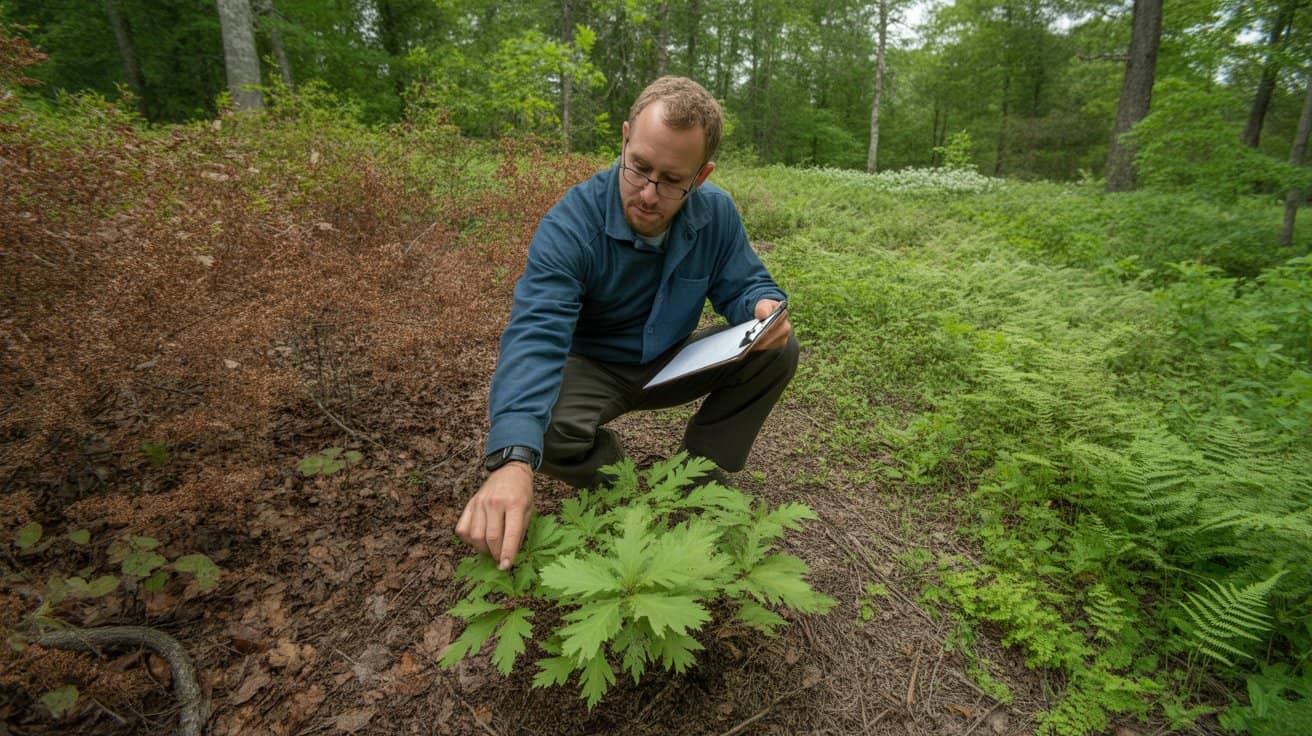
Walk every acre on foot, in different seasons if you can. Look at the understory, not just the canopy. Note where invasives are heavy and where they’re light. Look for regeneration — or the absence of it. Look at the canopy structure: is there variety, or is it all the same? Note snags, wet areas, stream corridors, old stone walls, field edges. You need to know what’s actually there before any management decision makes sense.
Step 2: Get a Professional Assessment
Walk the property a second time with a licensed forester. That second walk produces a professional inventory — species composition, stand structure, timber quality, invasive species mapping, regeneration assessment, wildlife habitat features. It’s the factual foundation of everything that follows. A good assessment takes several hours on a typical property. It tells you what you have, what’s working, and what isn’t.
Step 3: Set Clear Goals
Before any management work begins, write down what you want this land to do. Timber income, wildlife habitat, tax reduction, water quality, family legacy — most landowners want some combination. Getting the goals on paper makes it possible to evaluate whether any given management action serves them. It also helps when you’re working with a forester: the plan has to serve your goals, not generic forestry principles.
Step 4: Address the Biggest Problems First
On most properties I assess, the priority list is predictable: invasive species where they’re limiting regeneration, deer browse where it’s preventing seedling establishment, TSI where the stand has the best crop trees to release. These three actions, done in the right order and documented, form the core of most forest health and habitat improvement programs. Start there. Build from a success rather than trying to solve everything simultaneously.
Step 5: Plan the Work Over Time
A 10-year management plan isn’t a burden. It’s a road map that turns a long list of problems into a manageable sequence of actions. Each year’s work builds on the last. Over a decade, a property that looked badly degraded when I first walked it can be genuinely healthy, productive, and ecologically rich. I’ve seen it happen repeatedly. The key is starting, staying consistent, and keeping records of what gets done.
Frequently Asked Questions
How do I know if my forest is healthy?
Walk the understory and look for regeneration — native tree seedlings coming up in multiple species. That’s the most reliable indicator. Also look for structural diversity: trees of different sizes and ages, a functioning shrub layer of native species, snags and downed logs present, wildlife sign throughout. A closed canopy with no understory, wall-to-wall invasive shrubs, and no seedlings is a forest in trouble, regardless of how the canopy looks from the road.
Can I improve wildlife habitat without doing a timber harvest?
Yes. Invasive species control, snag retention, TSI work, regeneration management, and brush pile creation all improve habitat without a commercial timber harvest. A harvest may be the right tool eventually — particularly if the stand has mature timber and would benefit from the structural reset that a well-planned harvest provides — but it’s not a prerequisite for meaningful habitat improvement. Start with the practices that address the biggest limiting factors on your specific property.
How long does it take to see results from habitat improvement work?
It depends on what you’re doing and what you’re starting with. Invasive control produces visible results within one growing season — the native plants that were being suppressed begin to recover quickly once competition is reduced. TSI work and canopy gap creation produce native seedling regeneration within one to two growing seasons where deer browse is manageable. Wildlife response — increased bird diversity, grouse and woodcock using new habitat features — often happens within the first year after management. Long-term structural changes take longer, but the early indicators of progress are visible quickly.
What is the single most impactful thing I can do for forest health on my property?
Get a professional assessment first, then address whatever is limiting regeneration on your specific property. For most landowners in this region, that means invasive species control, deer browse management, or both — because those two factors prevent everything else from working. A canopy gap means nothing if invasive shrubs fill it before a native seedling can establish. A TSI project produces limited return if deer clip every seedling that emerges. Remove the limiting factor and the forest responds.
Do I need a management plan to improve forest health, or can I just start doing work?
You can start doing work without a plan — and sometimes that’s the right answer, particularly for obvious problems like a heavy barberry infestation near the edge of the property. But a plan makes every subsequent action more effective by ensuring it fits into a coherent, goal-directed sequence. It also documents what you’ve done, which matters for 480-a enrollment, for property sale disclosure, and for your own record of what the land looked like before you started and how far it’s come.
How Environmental Forest Products Can Help
Forest health and habitat improvement work is the work I find most satisfying — because the results are visible, they compound over time, and they leave a piece of land genuinely better than it was. I’ve been doing this work with private landowners across Sullivan, Orange, and Ulster Counties in New York — and into Pike and Wayne Counties in Pennsylvania and Sussex County in New Jersey — for over 30 years.
What I offer for forest health and habitat improvement:
- Forest health and habitat assessment — full property walk with inventory, invasive mapping, regeneration evaluation, and written findings
- Forest management plan preparation — written 10-year plan with habitat objectives built in alongside timber and tax goals
- Timber stand improvement marking — crop tree release, gap creation, and stand improvement work planned and marked for implementation
- Invasive species assessment and control planning — species identification, extent mapping, treatment recommendations, and priority sequencing
- Regeneration management — strategies for establishing native tree regeneration where browse pressure and invasive competition are limiting factors
- Timber harvest planning and supervision — when a harvest is part of the habitat plan, protecting residual stand and ensuring the work improves rather than damages the forest
- 480-a Forest Tax Law enrollment — management plan preparation, NYSDEC submission, and compliance support for qualifying properties
If you want to understand what your woodland’s current condition is and what it would take to improve it, the first step is a property assessment. Request an estimate — tell me your acreage, county, and what you’re trying to accomplish. I’ll give you a direct answer.
📞 (845) 754-8242
✉️ henry@eforestproducts.com
📍 Westbrookville, NY 12785
Serving Sullivan, Orange, and Ulster Counties NY | Pike and Wayne Counties PA | Sussex County NJ
Henry Kowalec is a licensed consulting forester and member of the Society of American Foresters with over 30 years serving private landowners in the Hudson Valley and Catskills. Environmental Forest Products | Westbrookville, NY 12785 | Licensed in NY, PA, NJ.
[ { “@context”: “https://schema.org”, “@type”: “Article”, “@id”: “https://blog.eforestproducts.com/forest-health-and-habitat-improvement/#article”, “headline”: “Forest Health and Habitat Improvement: A Guide for Private Woodland Owners”, “description”: “A complete guide to forest health and habitat improvement for private woodland owners. Henry Kowalec covers TSI, invasives, regeneration, wildlife, and management plans.”, “datePublished”: “2026-04-30”, “dateModified”: “2026-04-30”, “author”: { “@type”: “Person”, “@id”: “https://blog.eforestproducts.com/#henry-kowalec”, “name”: “Henry Kowalec”, “jobTitle”: “Consulting Forester”, “telephone”: “+18457548242”, “email”: “henry@eforestproducts.com”, “hasCredential”: { “@type”: “EducationalOccupationalCredential”, “name”: “New York State Licensed Forester” }, “memberOf”: { “@type”: “Organization”, “name”: “Society of American Foresters” } }, “publisher”: { “@type”: “Organization”, “name”: “Environmental Forest Products”, “logo”: { “@type”: “ImageObject”, “url”: “https://blog.eforestproducts.com/wp-content/uploads/2026/04/cropped-efp-logo-2.webp” } }, “mainEntityOfPage”: { “@type”: “WebPage”, “@id”: “https://blog.eforestproducts.com/forest-health-and-habitat-improvement/” }, “speakable”: { “@type”: “SpeakableSpecification”, “cssSelector”: [“.article-summary”, “h2”, “.faq-answer”] } }, { “@context”: “https://schema.org”, “@type”: “FAQPage”, “mainEntity”: [ { “@type”: “Question”, “name”: “How do I know if my forest is healthy?”, “acceptedAnswer”: { “@type”: “Answer”, “text”: “Walk the understory and look for regeneration — native tree seedlings coming up in multiple species. That’s the most reliable indicator. Also look for structural diversity: trees of different sizes and ages, a functioning shrub layer of native species, snags and downed logs present, wildlife sign throughout. A closed canopy with no understory, wall-to-wall invasive shrubs, and no seedlings is a forest in trouble, regardless of how the canopy looks from the road.” } }, { “@type”: “Question”, “name”: “Can I improve wildlife habitat without doing a timber harvest?”, “acceptedAnswer”: { “@type”: “Answer”, “text”: “Yes. Invasive species control, snag retention, TSI work, regeneration management, and brush pile creation all improve habitat without a commercial timber harvest. A harvest may be the right tool eventually — particularly if the stand has mature timber and would benefit from the structural reset a well-planned harvest provides — but it is not a prerequisite for meaningful habitat improvement.” } }, { “@type”: “Question”, “name”: “How long does it take to see results from habitat improvement work?”, “acceptedAnswer”: { “@type”: “Answer”, “text”: “Invasive control produces visible results within one growing season. TSI work and canopy gap creation produce native seedling regeneration within one to two growing seasons where deer browse is manageable. Wildlife response — increased bird diversity, grouse and woodcock using new habitat features — often happens within the first year after management. Long-term structural changes take longer, but the early indicators of progress are visible quickly.” } }, { “@type”: “Question”, “name”: “What is the single most impactful thing I can do for forest health on my property?”, “acceptedAnswer”: { “@type”: “Answer”, “text”: “Get a professional assessment first, then address whatever is limiting regeneration on your specific property. For most landowners in this region, that means invasive species control, deer browse management, or both — because those two factors prevent everything else from working. Remove the limiting factor and the forest responds.” } }, { “@type”: “Question”, “name”: “Do I need a management plan to improve forest health, or can I just start doing work?”, “acceptedAnswer”: { “@type”: “Answer”, “text”: “You can start doing work without a plan — sometimes that’s the right answer for obvious problems. But a plan makes every subsequent action more effective by ensuring it fits into a coherent, goal-directed sequence. It also documents what you’ve done, which matters for 480-a enrollment, for property sale disclosure, and for your own record of the land’s condition and progress.” } } ] }, { “@context”: “https://schema.org”, “@type”: “BreadcrumbList”, “itemListElement”: [ { “@type”: “ListItem”, “position”: 1, “name”: “Home”, “item”: “https://blog.eforestproducts.com” }, { “@type”: “ListItem”, “position”: 2, “name”: “Forest Health & Habitat”, “item”: “https://blog.eforestproducts.com/category/forest-health-habitat” }, { “@type”: “ListItem”, “position”: 3, “name”: “Forest Health and Habitat Improvement”, “item”: “https://blog.eforestproducts.com/forest-health-and-habitat-improvement/” } ] } ]