When landowners ask me when to harvest timber, they’re usually thinking about one thing — whether now is a good time to sell. But “when to harvest” is actually three separate questions, and a good answer requires addressing all three.
The first is silvicultural: is the stand ready? The second is operational: what season minimizes site damage and maximizes logging efficiency? The third is economic: where are markets right now relative to where they’ve been? Each question has a different answer — and the right harvest timing is where those three answers converge.
Here’s how to think through all three, and what the answers look like on private woodland in Sullivan, Ulster, and Orange Counties.
The Three Timing Questions Every Landowner Should Ask
Most landowners who call me about harvest timing are focused on the economic question — is this a good time to sell given current prices? That’s worth asking. But it’s the third question, not the first. Getting the first two wrong makes the third one irrelevant.
A stand that isn’t silviculturally ready produces lower returns regardless of what the market is doing. A harvest conducted in the wrong season can damage a property in ways that reduce its value more than any market fluctuation would. The economic question matters — but the stand has to be ready, and the conditions have to support a harvest, before market timing has any practical meaning.
Question One — Is Your Stand Silviculturally Ready?
Silvicultural readiness means the stand has reached a point in its development where a harvest is the right management prescription — not just that there’s timber on the property that a buyer wants to take.
A harvest is appropriate when:
- Mature trees are reaching the point of peak value accumulation and beginning to compete with younger stems for growing space
- The stand has enough merchantable volume to attract competitive bids and justify the logging mobilization costs
- A silvicultural prescription — selective harvest, shelterwood, or another approach — can be designed that captures income while improving the residual stand’s quality and composition
- The management plan prescribes a harvest in the current planning period
Signs the Stand Is Ready for Harvest
On most mixed hardwood properties in Sullivan and Ulster Counties, signs of harvest readiness include: mature canopy trees with full crowns approaching 18 inches DBH or larger in high-value species; younger mid-canopy trees being suppressed by mature stems that could respond strongly if given growing room; and a stand that hasn’t been harvested in 20 or more years with meaningful volume accumulation.
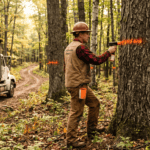
A timber cruise by a licensed forester is the definitive readiness check. It tells you the volume by species and grade, the estimated stumpage value at current prices, and whether the stand’s composition and structure support a harvest prescription that improves long-term quality. For the full picture on what drives timber value and how to read it, see my guide on how much timber is worth.
Signs the Stand Is Not Ready Yet
Some stands look mature but aren’t ready for a productive harvest. Common situations where waiting is the better choice: stands dominated by trees in the 12- to 14-inch DBH range that are still in a strong growth phase and would benefit more from five more years of diameter accumulation than from harvest now; stands that were recently thinned through TSI work and need more time for crop trees to respond; or stands where invasive species pressure is so severe that a harvest would flood the canopy gaps with barberry rather than native regeneration.
Harvesting before a stand is ready wastes the growth potential that makes a future harvest more valuable. Five more years of diameter growth on a stand of 14-inch cherry and oak can add meaningful stumpage value per tree — sometimes more than the current total stumpage price for those trees.
Question Two — What Season Works Best for Logging Operations?
Season affects soil disturbance, site damage, equipment access, and in some cases market availability. In the Northeast, the logging calendar has a clear preference hierarchy.
Winter Harvesting — The Preferred Season
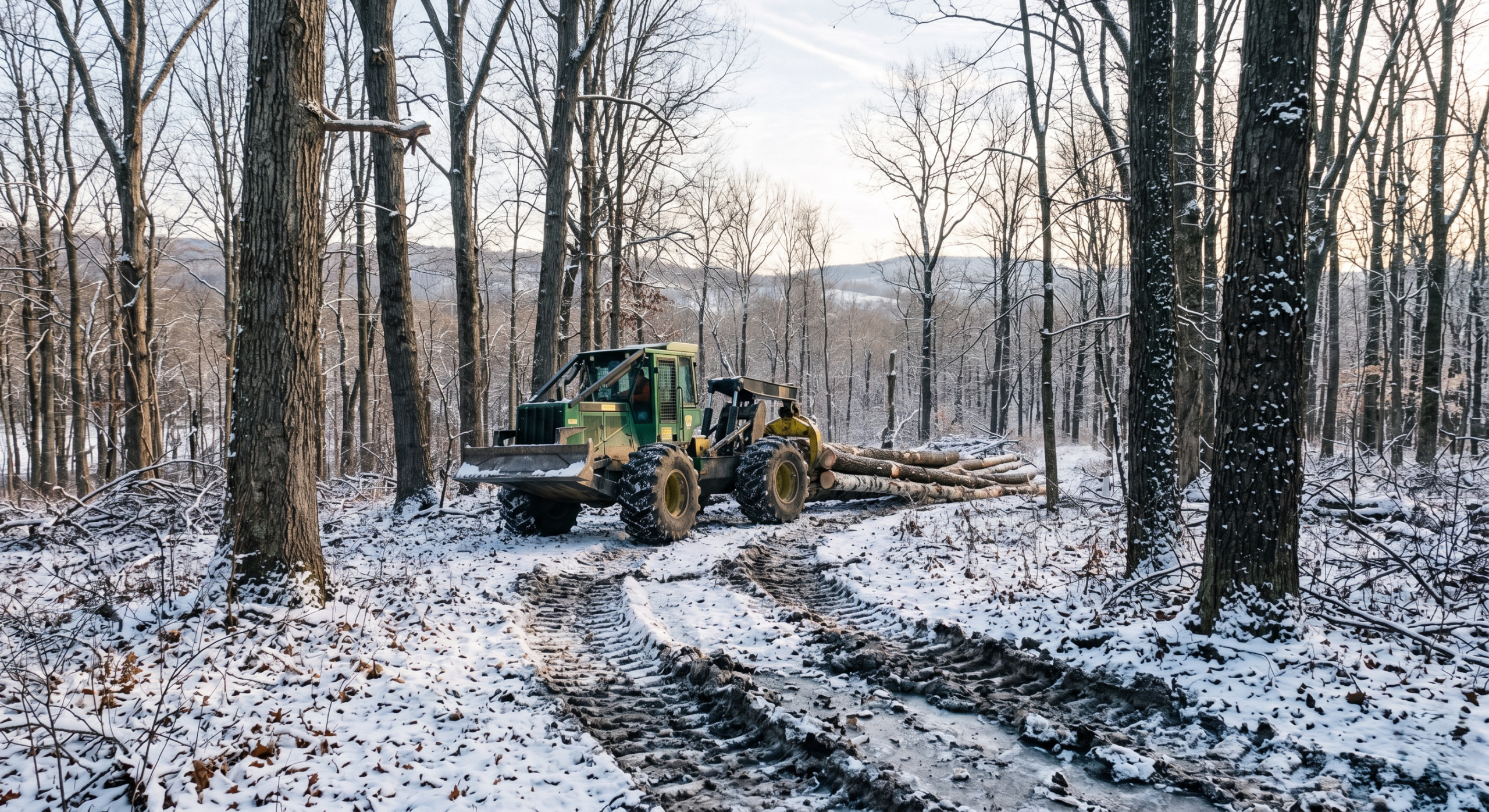
Winter logging — typically December through March in our region — is the preferred season for most hardwood harvests on private land in the Hudson Valley and Catskills. Frozen ground dramatically reduces soil compaction and rutting from skidder traffic. Frozen soil supports equipment that would bog down or cause serious site damage in wet conditions. Root damage to residual trees is also reduced when soil is frozen.
Winter harvesting allows loggers to access stands that would be inaccessible or unusable in warmer months due to wet soils, stream crossings, or soft ground conditions. That expanded access opens more of the stand to harvest and keeps logging costs lower — which supports better stumpage prices for the landowner.
In Sullivan and Ulster Counties, we often see the most productive and least damaging harvests occur in January and February when nighttime temperatures keep the ground frozen through the workday. A hard freeze that holds for several weeks is the logging window most experienced foresters and loggers want to work in.
Summer Harvesting — When It Works and When It Doesn’t
Summer harvesting is feasible on well-drained, upland sites with good road access and no significant wet areas or stream crossings in the harvest zone. On those sites, summer logging can proceed without the soil damage concerns that dominate the spring and fall seasons.
Summer has two practical disadvantages. First, the ground is never as firm as frozen winter ground, so equipment-intensive operations are more likely to cause rutting even on well-drained sites. Second, insects and pathogens that attack freshly cut stumps and exposed wood are more active in warm weather — though this matters more for residual stand management than for timber value.
Summer harvesting works best for salvage situations — standing dead or rapidly declining timber where waiting for winter would reduce the wood’s value — or for small, targeted operations on sites with proven equipment access.
Spring and Fall — The Seasons to Avoid
Spring and fall are generally the worst seasons for timber harvesting on private land in our region. When spring brings wet soils from snowmelt and rain — even well-drained sites can be saturated for weeks. Equipment traffic during spring thaw causes the most severe soil compaction and rutting of any season. Many logging operations won’t work in early spring because the damage risk is too high to manage profitably.
Fall can be acceptable on dry upland sites after a drought summer, but unpredictable rainfall and the transition toward freezing temperatures make scheduling difficult. The safest approach: plan for winter and fall back to summer on proven dry sites if winter conditions don’t materialize.
Question Three — Where Are Markets Right Now?
Timber markets fluctuate with sawmill capacity, regional log demand, housing starts, export demand, and fuel costs. A well-managed competitive bid process gets you the best available price in the current market — but the market itself shifts quarter to quarter and year to year.
Watching market timing is worth doing, but it should not become the reason to delay a harvest that is silviculturally ready and operationally feasible. A timber stand cannot be warehoused indefinitely while you wait for a better market. Trees that are past peak value accumulation continue to deteriorate. A market upturn rarely compensates for the value lost to overmaturity, storm damage, or pest pressure that develops while you’re waiting.
The practical approach: if the stand is ready and conditions allow, don’t delay a harvest more than one to two seasons chasing a market move. A properly managed competitive bid sale in a flat market almost always returns more than an unmanaged sale in a strong market — because the process, not just the market, determines what you actually receive. For the full framework on how to maximize your timber sale return, see my article on how to sell timber from your land.
The One Situation Where Timing Doesn’t Wait — EAB and Ash
Everything above assumes you have the luxury of timing. One situation removes that luxury entirely: ash trees with emerald ash borer.
EAB-affected ash does not wait for silvicultural readiness assessments, preferred logging seasons, or favorable market conditions. Once crown decline begins, the timber value window closes on a timeline measured in one to two seasons — not years. An ash tree that is a viable sawlog today may be unmarketable next spring.
If you have ash on your property and you’ve noticed any crown thinning, woodpecker activity on the upper trunk, or D-shaped exit holes in the bark, the timing question is answered: now. The silvicultural, operational, and economic considerations all point the same direction. For the full EAB picture and what to do, see my article on emerald ash borer for NY landowners.
How a Management Plan Determines Your Harvest Timing
For landowners enrolled in New York’s 480-a Forest Tax Law, harvest timing is not arbitrary. The forest management plan prescribes harvest activities in specific target years as part of the ten-year activity schedule. Those prescribed years reflect the forester’s judgment about when the stand will be silviculturally ready — based on the field inventory conducted when the plan was written.
Following the plan’s prescribed harvest timing keeps the enrollment in compliance and ensures that the harvest happens at the right point in the stand’s development. A landowner who pushes a harvest earlier than prescribed — or delays significantly past the target year — risks both silvicultural and compliance consequences. For how management plans govern harvest timing and 480-a compliance, see my article on what a forest stewardship plan is.
For landowners without a current management plan, the harvest timing question is best answered by engaging a consulting forester for a timber cruise and assessment — which produces both a readiness determination and a market value estimate for the current moment. That assessment is the foundation for any timing decision. For the selective harvesting approach that applies to most private woodland in this region, see my article on selective timber harvesting.
Frequently Asked Questions
Does the season affect the quality or price of the timber I sell?
Season doesn’t affect the quality of the timber you sell — log grade is determined by the tree’s characteristics, not when it’s cut. Season does affect the logging costs a buyer incurs, which can affect what he’s willing to pay in stumpage. Winter logging is generally more efficient and less costly on difficult terrain and wet sites, which supports better stumpage offers from buyers working in those conditions. On easy sites with good access, seasonal cost differences are smaller.
Should I wait for timber prices to go up before I sell?
Waiting for a market upturn is a reasonable consideration — but not an indefinite strategy. Trees that are past peak growth and value accumulation don’t benefit from waiting. A well-managed competitive bid sale in a flat market returns more than a poorly managed sale in a strong market. If your stand is silviculturally ready and you need the income or the stand improvement a harvest provides, a one-to-two-season delay to watch the market is defensible. Waiting multiple years while timber quality potentially declines is not.
How do I know if my stand needs more time before harvesting?
The most reliable answer comes from a timber cruise by a licensed forester. The cruise tells you current merchantable volume, species and grade distribution, and stumpage value at current prices. It also tells you — through the forester’s silvicultural assessment — whether the stand is at the right point for harvest or whether more growth time would materially increase the value. A forester walking the stand with harvest timing in mind gives you a recommendation grounded in what’s actually there, not in generalizations about stand age or species composition.
How Environmental Forest Products Can Help
I’ve been advising private landowners on harvest timing across Sullivan, Ulster, and Orange Counties for over 30 years. Getting timing right means addressing all three questions — silvicultural readiness, operational season, and market conditions — before any harvest decision is made. I walk the stand, cruise the timber, and give you a straight answer about whether now is the right time or whether waiting serves you better.
Here’s what I can do for a landowner evaluating harvest timing:
- Walk the stand and assess silvicultural readiness — is the stand at the right point for harvest now, or does it need more time?
- Conduct a timber cruise and provide a current stumpage value estimate so you know what the stand would return in today’s market
- Advise on seasonal timing given your stand’s site conditions, access, and the current logging season calendar
- Monitor market conditions and advise on whether current prices support proceeding or suggest a brief wait
- Manage the full sale process — marking, competitive bids, contract, and oversight — when the timing is right
- Evaluate any ash timber for EAB status if the urgency question applies to your property
If you’re wondering whether now is the right time to harvest — or whether you should have harvested two years ago — a property walk gives you the answer. Call me.
Request a Free Harvest Timing Assessment
Call me directly: (845) 754-8242
Email: henry@eforestproducts.com
Serving Sullivan County NY, Ulster County NY, Orange County NY, Pike County PA, Wayne County PA, and Sussex County NJ.
Henry Kowalec is a licensed consulting forester and member of the Society of American Foresters with over 30 years serving private landowners in the Hudson Valley and Catskills. Environmental Forest Products | Westbrookville, NY 12785 | Licensed in NY, PA, NJ.