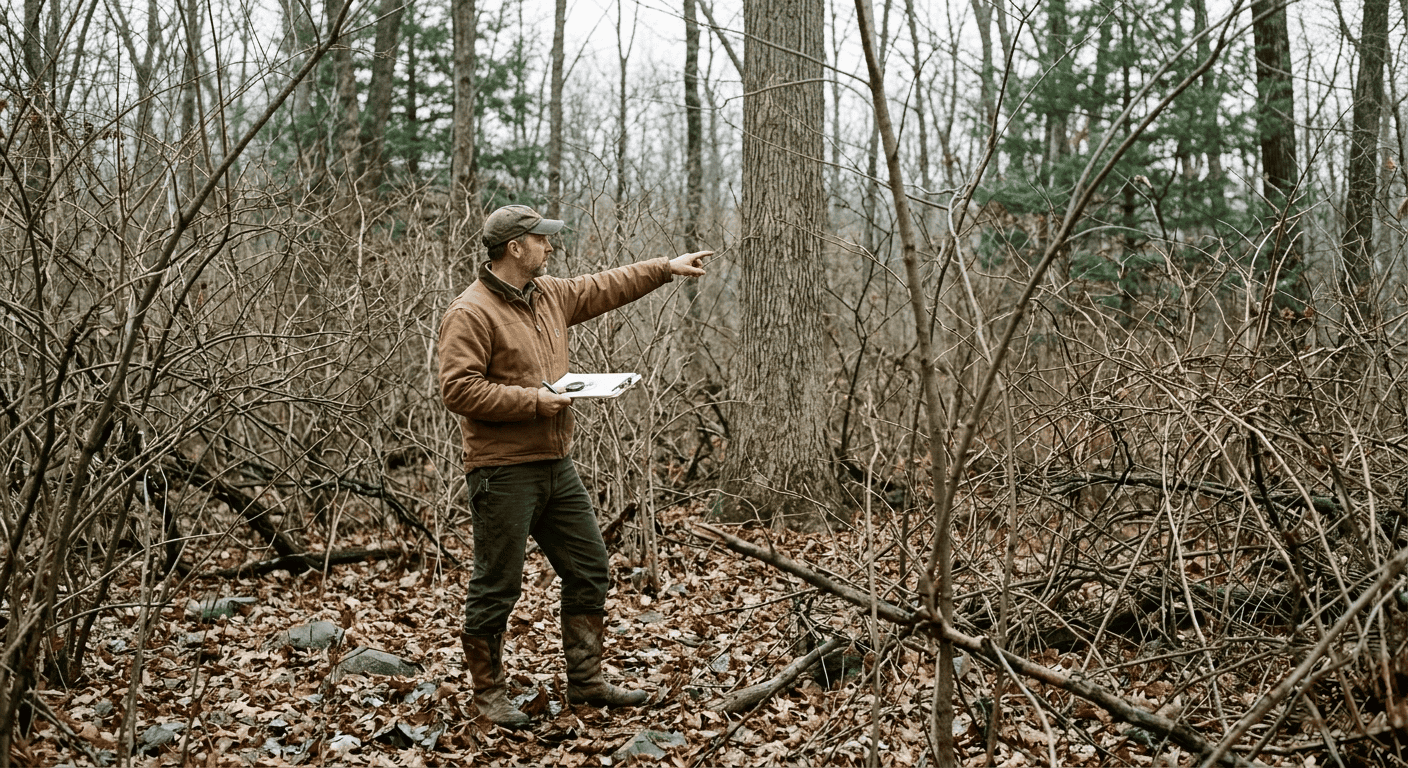
Walk into most unmanaged woodlots in Sullivan or Ulster County and you’ll see the same thing. Good trees — decent oaks, black cherry, maybe some hard maple — buried under a tangle of competing stems. Wolf trees spreading wide crowns over everything. Multiflora rose and Japanese barberry taking over the understory. Beech sprout clumps crowding out every sapling worth keeping.
The timber is there. It just can’t grow. The stand is choked.
That’s exactly the situation timber stand improvement is designed to fix. It’s one of the most valuable tools I use for private landowners — and one of the least understood. Here’s what it is, what it costs, and how to know whether your woodlot needs it.
What Is Timber Stand Improvement?
Timber stand improvement — commonly called TSI — is a silvicultural practice that removes low-value, competing, or undesirable vegetation to favor the best trees in your stand.
Unlike a timber harvest, TSI usually produces no immediate income. You’re not selling logs. You’re investing in the trees you keep.
The goal is to redirect your forest’s growing capacity. Every acre of land can only produce so much wood volume per year. When that capacity is shared among 200 stems per acre — many of them worthless — your best trees grow slowly. Remove the competition, and those same good trees put on diameter and value at a much faster rate.
TSI is how you turn a crowded, stagnant woodlot into a stand with real timber value 15 to 20 years from now. It’s a long game. But on the right property, there is no better investment in long-term forest productivity.
For an overview of how TSI fits into the full range of management options for private landowners, see my complete timber harvesting guide.
What TSI Actually Removes — and What It Leaves Behind
TSI is targeted work. You’re not clearing land. You’re editing the stand.
The most common TSI treatments remove:
- Wolf trees — large, wide-spreading trees with poor form that shade out everything around them and produce little usable timber
- Cull trees — stems with rot, severe defects, or forks low on the trunk that will never produce quality logs
- Undesirable species — species with low timber value that are crowding high-value crop trees (striped maple, ironwood, and beech root sprouts are common examples in this region)
- Invasive woody shrubs — Japanese barberry, multiflora rose, and autumn olive competing with desirable regeneration
- Vines — wild grape, bittersweet, and Virginia creeper that girdle and damage crown trees
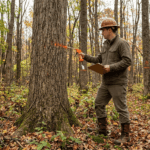
What TSI leaves behind is your crop tree layer — the best-formed, highest-value trees in the stand — with full access to light, water, and soil nutrients. I walk the stand and identify crop trees first. The removal work is designed entirely around giving those trees room to grow.
This approach is directly connected to what I described in my article on selective timber harvesting — specifically the concept of crop tree release. TSI is often the non-commercial version of that same principle.
The Most Common TSI Problems I See in Sullivan and Ulster Counties
Every region has its own set of forest health challenges. In Sullivan and Ulster Counties, the problems I see most often on unmanaged private land are consistent.
Beech is at the top of the list. Beech bark disease has left most of our mature beech trees compromised or dying. But beech responds to stress by throwing up massive root sprout colonies. Those sprouts are vigorous, shade-tolerant, and relentless. They crowd out oak and cherry regeneration across entire acres if left unchecked.
Japanese barberry is the second major problem. It carpets the understory, shades out desirable seedlings, and serves as a tick habitat multiplier. A healthy woodlot does not have a wall-to-wall barberry understory. Many unmanaged Sullivan County woodlots do.
The third issue is wolf tree density. Old fields that grew into forest — common throughout the region — often have a generation of wide-crowned, low-grade trees dominating the canopy. The good timber is suppressed underneath them. TSI work on these stands can release timber value that’s been waiting decades to express itself.
Does TSI Pay for Itself?
Usually not in the short term. That’s the honest answer.
Most TSI work involves cutting and treating stems that have no commercial value. You pay for the labor. You don’t receive a check from a log buyer. The return comes later — in faster growth on your crop trees, in a stand that’s worth significantly more when the next timber harvest comes around.
There are exceptions. Sometimes TSI work in a dense stand turns up enough merchantable pulpwood or firewood to offset some treatment cost. In areas with biomass markets, occasional TSI work breaks even or better. But don’t plan the budget around it.
Think of TSI the same way you’d think about fertilizing a farm field. You spend money now to increase productivity over the next growing season — except in forestry, the growing season is measured in decades. The return is real. It just takes time to arrive.
Cost-share programs through USDA’s Environmental Quality Incentives Program (EQIP) can offset TSI expenses for qualifying landowners. I help landowners evaluate whether they qualify as part of the management planning process.
TSI and New York’s 480-a Forest Tax Law
If you’re enrolled in New York’s 480-a Forest Tax Law — or considering enrollment — TSI is often a required management activity.
The 480-a program requires that enrolled land be actively managed according to an approved forest management plan. Depending on your stand conditions, that plan may prescribe TSI work as part of the management schedule. Skipping required activities can put your enrollment at risk and trigger back-tax liability.
I write 480-a management plans and I understand exactly what DEC expects in terms of TSI prescriptions. If your stand has the problems I described above — invasives, wolf trees, dense beech sprout competition — your management plan will address them directly. That’s not a burden. It’s the work that makes your forest more valuable.
The connection between TSI and who plans and oversees it is covered in detail in my article on timber buyers vs. consulting foresters — particularly why a licensed forester, not a logging contractor, should be writing your management prescriptions.
Can You Do TSI Yourself?
Some of it, yes. Landowners with a chainsaw, physical fitness, and a working knowledge of local tree species can do meaningful TSI work on their own property.
Vine removal is a good DIY starting point. Cutting and treating invasive shrubs with herbicide is manageable for a motivated landowner willing to follow label directions. Small-diameter competition removal around a handful of identified crop trees is achievable without professional help.
Where DIY TSI falls short: identifying which trees are actually worth releasing, prescribing the right treatment intensity, and covering meaningful acreage efficiently. If you misidentify your crop trees — or release the wrong stems — you’ve done the work twice for half the result.
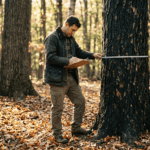
For any TSI prescription covering more than a few acres, a consulting forester walk-through is worth the cost. You get a written prescription, crop tree identification, and a treatment sequence that makes the labor you put in count for the right trees.
Frequently Asked Questions
What is the difference between TSI and a timber harvest?
A timber harvest removes trees with commercial value and generates income for the landowner. TSI removes trees and vegetation with little or no commercial value to benefit the trees you keep. TSI typically costs money rather than generating it. Both practices can be part of a well-managed woodlot — they serve different purposes at different points in a stand’s development.
How do I know if my woodlot needs timber stand improvement?
The clearest signs are a crowded, uneven canopy with good trees buried under poor competition; heavy invasive shrub cover in the understory; visible vine damage on crop trees; or dense beech sprout thickets suppressing desirable regeneration. If you walk your property and can’t identify a clear layer of well-formed, high-value trees with growing room, TSI is probably needed. A forester walk-through gives you a definitive answer.
Is TSI required under New York’s 480-a program?
It depends on your stand conditions and your approved management plan. If your plan prescribes TSI work for a given year or decade, yes — you need to complete it to stay in compliance. Not all enrolled stands require TSI. A forester writing your management plan will prescribe only the treatments your stand actually needs, based on what’s on the ground.
How Environmental Forest Products Can Help
TSI is some of the most satisfying work I do. Walking a stand before and after a proper treatment — seeing good trees released from decades of competition — is what forest management is actually about.
If you own wooded land in Sullivan, Ulster, or Orange County and you’re not sure whether your woodlot needs TSI work, a property walk is the right first step. I’ll tell you what’s there, what the stand needs, and what the realistic return on that investment looks like over time.
Here’s what I can do for your property:
- Walk and evaluate your stand for TSI need and priority areas
- Identify and mark crop trees for release treatment
- Write a TSI prescription as part of a full forest management plan
- Evaluate your eligibility for USDA EQIP cost-share funding
- Advise on 480-a Forest Tax Law enrollment if TSI work qualifies your property
Request a Free Woodlot Evaluation
Call me directly: (845) 754-8242
Email: henry@eforestproducts.com
Serving Sullivan County NY, Ulster County NY, Orange County NY, Pike County PA, Wayne County PA, and Sussex County NJ.
Henry Kowalec is a licensed consulting forester and member of the Society of American Foresters with over 30 years serving private landowners in the Hudson Valley and Catskills. Environmental Forest Products | Westbrookville, NY 12785 | Licensed in NY, PA, NJ.