Landowners who haven’t been through the process often assume creating a forest management plan is complicated. It isn’t. The process is sequential and predictable. Each step follows naturally from the one before it. What makes it feel complicated is not knowing the steps in advance — so here they are, laid out plainly from first call to approved plan.
The process I follow on every management plan in Sullivan, Ulster, and Orange Counties runs through seven steps. Some take an afternoon. Some take a few weeks. All of them are necessary — and all of them produce something useful beyond just the final document.
Here is exactly how to create a forest management plan in New York, from the first conversation through 480-a enrollment.
Step One — Define Your Goals Before the Forester Arrives
The most useful thing you can do before calling a consulting forester is write down what you want from your woodland. Not in forestry language — in plain terms. Timber income. Lower property taxes. Better deer hunting. A healthy forest for your children. Some combination of all of those.
Your goals shape everything the plan prescribes. A plan built around maximizing timber income over 20 years looks different from one built around 480-a enrollment with wildlife habitat improvements. A plan for a landowner who wants to eventually sell the property looks different from one for a landowner who wants to pass it to the next generation.
You don’t need to know what silvicultural treatments your stand needs. That’s my job. But you need to know what you want the land to do for you — because that determines the management direction before the field work begins.
Step Two — Engage a Licensed Consulting Forester
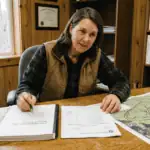
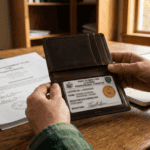
In New York State, a forest management plan submitted for 480-a enrollment must come from a licensed forester. The State Education Department issues that license. A timber buyer cannot produce a qualifying plan. A logging contractor cannot produce one. The licensed consulting forester is the required professional.
When you contact a forester, the first conversation covers your goals, your acreage, and what you know about the property’s history — prior harvests, existing health issues, any prior plans. That conversation gives the forester enough context to schedule the field inventory and provide a realistic fee estimate.
Ask specifically whether the forester has submitted 480-a plans to the NYSDEC regional office covering your county. Regional familiarity matters. NYSDEC regional offices have different staff, different review workloads, and different expectations about plan format and level of detail. A forester who knows your regional office produces plans that move through review without unnecessary delays.
For a complete explanation of what distinguishes a consulting forester from a timber buyer — and why the distinction matters for every step that follows — see my article on timber buyers vs. consulting foresters. For what the plan will actually contain, see my guide on what a forest stewardship plan is.
Step Three — The Field Inventory
The field inventory is the foundation of everything the plan prescribes. No plan is better than its field data. A forester who writes a management plan without a thorough on-the-ground inventory is producing a document, not a plan.
What the Forester Is Looking For
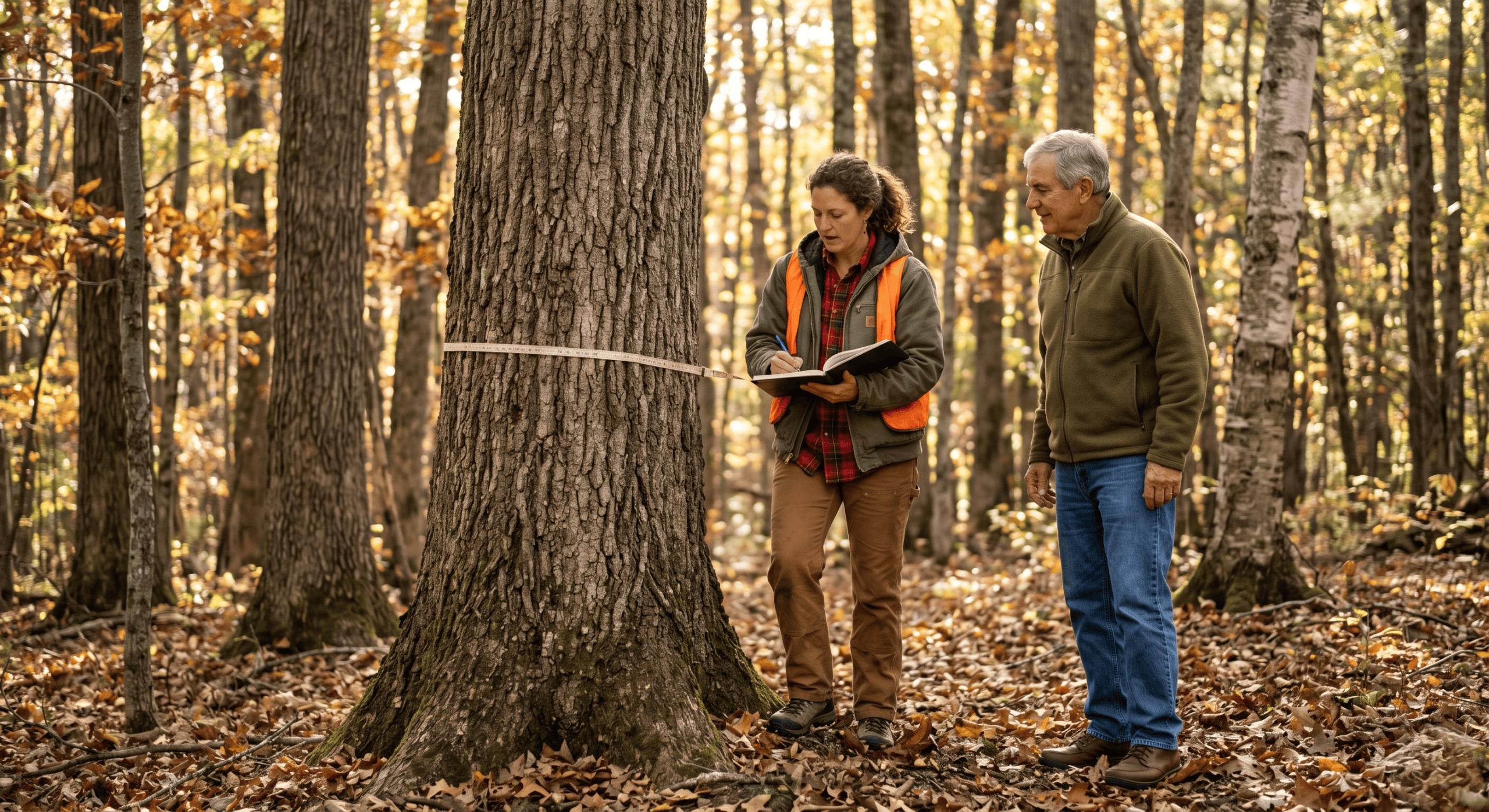
During the field inventory, I walk the entire property systematically. I identify and map distinct stands — areas of forest with similar species composition, age, structure, and management potential. Most private properties in this region have between three and eight stands depending on size and history.
Within each stand, I establish sample plots at regular intervals. At each plot, I record every merchantable tree: species, diameter at breast height, estimated log grade, and any visible defects. I also note regeneration — what seedlings and saplings are establishing under the canopy — and understory conditions, including invasive species presence and coverage.
Beyond timber inventory, I assess forest health. I look for EAB signs on ash trees, hemlock woolly adelgid on hemlocks, beech bark disease on beech, and any other active or emerging threats. I note access — roads, skid trails, stream crossings, wet areas — because access affects both management options and timber sale logistics.
The field inventory on a 50- to 100-acre property typically runs one to two days. Larger or more complex properties take longer. The inventory data goes directly into the stand descriptions and management prescriptions that form the body of the written plan.
What the Landowner Should Do During the Walk
Walk with me. Not because I need you to — but because the field visit is the most educational hour you’ll spend on your property. Walking the stands together, I can show you what I’m seeing and why it matters. You can point out areas you’ve noticed — a section of dead ash, a spot where deer concentrate, an area of heavy invasive shrub growth. That context improves the plan.
Bring any documents you have. Prior timber sale contracts tell me what was cut and when. An existing management plan tells me what conditions looked like at the last inventory date. A survey map helps clarify boundary questions before they become problems later. The more context you provide, the more accurate the field assessment becomes.
Step Four — The Written Plan
After the field inventory, the forester writes the management plan document. The writing phase typically takes two to four weeks after the field work is complete. The timeline depends on the forester’s current workload and the complexity of the property.
What Goes Into Each Section
A complete forest management plan in New York contains these components:
- Property description — legal description, acreage, location, ownership, and date of inventory
- Stand descriptions — a written description of each identified stand covering species composition, age, stocking level, site quality, and forest health conditions
- Property map — stand boundaries, access roads, water features, property lines, and any notable features
- Management objectives — the landowner’s stated goals for the property, in order of priority
- Ten-year activity schedule — prescribed management activities for each stand, with target years, silvicultural rationale, and expected outcomes
- Forest health assessment — documentation of active or emerging threats and prescribed monitoring or treatment responses
- Forester’s certification — signed statement of professional independence and credentials
The activity schedule is the most important section. It converts the stand descriptions into a management roadmap. Each prescribed activity — a harvest, a TSI treatment, an invasive control treatment — appears in a specific target year with a clear reason for that timing. The schedule is what a NYSDEC reviewer looks at to determine whether the plan reflects genuine active management. It’s also what keeps you in 480-a compliance over the enrollment period.
Step Five — NYSDEC Review and Approval
Once the plan is complete, the forester submits it to the NYSDEC regional office covering your county. The regional forester reviews the plan for completeness, accuracy, and compliance with program standards.
A well-written plan from a forester familiar with the regional office typically moves through review without significant delays. NYSDEC may request clarifications or minor revisions — a more detailed stand description, a clarification on harvest timing, a more specific prescription for a particular treatment. A forester who writes plans regularly for that office knows what to expect and builds the plan to meet those expectations from the start.
Review timelines vary by regional office workload. Plan for four to eight weeks from submission to approval under normal conditions. If you’re targeting enrollment before a specific tax year, build that timeline into your planning calendar. For a complete picture of the 480-a program and what approval makes possible, see my article on forest stewardship and 480-a tax savings.
Current program requirements and regional office contacts are at dec.ny.gov.
Step Six — 480-a Enrollment Application
Once NYSDEC approves the management plan, the landowner files an application for 480-a enrollment with the local tax assessor. The application references the NYSDEC-approved plan and requests the reduced assessment on the enrolled acreage.
The assessor applies the 480-a reduction to the enrolled acreage for the following tax year. From that point forward, the enrolled land carries a reduced assessed value — up to 80% below the standard assessment — and the annual property tax savings begin.
The key transition point is from NYSDEC approval to assessor application. Don’t let time pass between them. File the assessor application promptly after receiving NYSDEC approval to capture the tax savings for the earliest possible tax year.
Step Seven — Following the Plan
A management plan is only as valuable as the management it produces. The plan’s activity schedule prescribes specific treatments in specific years. Completing those activities on or near schedule is what keeps the 480-a enrollment in good standing.
When a harvest year arrives in the schedule, engage your consulting forester to mark the timber and manage the sale. A TSI treatment is prescribed, complete the work and document it. When invasive control is scheduled, treat the target areas and record what was done and when.
Keep records. Document every management activity with date, location, and description of work completed. Those records are your compliance documentation if NYSDEC ever reviews your enrollment. They’re also the institutional memory of your woodland — a record of what was done and when that informs every future management decision.
For the full picture of what TSI activities involve and how they fit into the plan’s activity schedule, see my article on timber stand improvement. For timber harvest management within a plan, see my timber harvesting guide for private landowners.
Can You Write Your Own Forest Management Plan?
No — not for 480-a enrollment. NYSDEC requires a licensed forester to write and sign the plan. A landowner-written plan does not qualify.
Beyond the regulatory requirement, a self-written plan is unlikely to produce useful prescriptions without the field inventory skills, volume tables, log grade knowledge, and market awareness that foresters develop through years of practice. A plan written from aerial photos and assumptions is not a plan — it’s a guess dressed up in document format.
For a purely personal management reference with no regulatory purpose, a landowner can certainly document their observations and set their own management intentions. But that document won’t qualify for 480-a, won’t satisfy EQIP requirements, and won’t protect you in a timber sale negotiation.
How Long Does the Full Process Take?
From first forester contact to active 480-a enrollment, the realistic timeline runs three to six months under normal conditions. Here’s how that breaks down:
- Initial conversation and scheduling: one to two weeks
- Field inventory: one to two days on the ground; scheduled within two to four weeks of engagement
- Plan writing: two to four weeks after the field work
- NYSDEC review: four to eight weeks from submission
- Assessor application: one to two weeks after NYSDEC approval
- First reduced tax bill: the following tax year after assessor application
If you want 480-a enrollment in place before a specific tax year, work backward from the assessor’s application deadline in your township. Most township assessors process applications on a fixed annual schedule. Missing the deadline by a few weeks can delay enrollment by a full year. Plan the forester engagement accordingly.
For what the plan costs and what the return looks like, see my article on forest management plan cost in New York. For the full pillar overview of what management plans cover and what they make possible, see my guide on forest management plans for private landowners.
Frequently Asked Questions
What does NYSDEC look for when reviewing a forest management plan?
NYSDEC reviewers look for three things primarily. First, that the plan reflects actual field conditions — the stand descriptions should match what a forester actually observed on the ground, not generic descriptions that could apply to any woodlot. Second, that the activity schedule prescribes genuine active management — real treatments in realistic target years, not a vague list of activities with no timeline. Third, that the forester who signed the plan holds a current New York State license. Plans that clear all three of these get approved. Plans that don’t get returned for revision.
What happens after my management plan is approved?
After NYSDEC approves the plan, file the 480-a enrollment application with your local tax assessor promptly. Once the assessor processes the application, the reduced assessment applies to your enrolled acreage for the following tax year. From that point, follow the activity schedule — completing prescribed management activities in or near their target years, keeping records of what was done, and contacting your forester when circumstances change that might warrant a plan amendment. The plan runs for ten years, then renews.
How often does the plan need to be updated?
A 480-a management plan covers a ten-year planning period. At the end of that period, the forester updates the plan — a new field inventory, updated stand descriptions, and a new ten-year activity schedule reflecting the changes in the stand since the original plan. The renewal keeps the 480-a enrollment active and the plan current with actual stand conditions. Plan renewals typically cost less than original plans because much of the background documentation carries forward and the forester is already familiar with the property.
How Environmental Forest Products Can Help
I’ve been guiding landowners through this process across Sullivan, Ulster, and Orange Counties for over 30 years. Every management plan I produce follows the same seven-step sequence — goals conversation, field inventory, written plan, NYSDEC submission, enrollment application, and ongoing compliance guidance. The process is predictable because I’ve done it hundreds of times.
Here’s what I handle for every management plan engagement:
- Pre-inventory goals conversation — I understand your objectives before setting foot on the property
- Full field inventory — systematic stand assessment, timber cruise, health evaluation, and access documentation
- Complete written plan — all required components, written to satisfy both NYSDEC 480-a requirements and USDA NRCS technical standards for cost-share programs
- NYSDEC submission and regional office communication through approval
- Guidance on the assessor application process and enrollment timing
- Ongoing availability for compliance questions, plan amendments, and management activity supervision throughout the ten-year period
If you own 50 or more acres of productive forest land in Sullivan, Ulster, or Orange County and you’re ready to start the process, call me. The first conversation is free, and it will tell you exactly what the plan involves for your specific property.
Request a Free Forest Management Plan Consultation
Call me directly: (845) 754-8242
Email: henry@eforestproducts.com
Serving Sullivan County NY, Ulster County NY, Orange County NY, Pike County PA, Wayne County PA, and Sussex County NJ.
Henry Kowalec is a licensed consulting forester and member of the Society of American Foresters with over 30 years serving private landowners in the Hudson Valley and Catskills. Environmental Forest Products | Westbrookville, NY 12785 | Licensed in NY, PA, NJ.