The most common thing I hear from landowners who call me about a neglected woodlot is some version of: “I think it’s too far gone.” They’ve looked at the tangled understory, the crowded stems, the invasive shrubs taking over, and concluded that the situation is beyond recovery.
It almost never is. What looks like chaos in an unmanaged woodlot is usually a recoverable situation — with the right sequence of treatments applied in the right order. The trees that have been growing quietly beneath the competition are still there. The soil is still productive. The biological potential hasn’t left the property. It’s just been suppressed.
Here’s how to assess a neglected woodlot, what to address first, and what realistic improvement looks like over a management horizon.
What Neglect Actually Does to a Woodlot
An unmanaged woodlot doesn’t stand still. It changes — usually in directions that reduce timber value, reduce wildlife habitat quality, and make eventual improvement more difficult and more expensive.
The specific changes depend on the starting conditions. But the pattern I see most consistently across Sullivan and Ulster Counties on unmanaged private woodland runs roughly like this.
In the first decade of neglect, canopy competition intensifies. Poor-quality stems — red maple, striped maple, ironwood, beech sprouts — gain ground in the understory and lower canopy. Better species get crowded. Growth rates on high-value trees slow as competition for light, water, and nutrients increases.
By decade two, invasive shrubs establish. Japanese barberry, multiflora rose, and in some cases autumn olive move into the understory. They crowd out native regeneration. Deer browse pressure concentrates on the shrub layer because desirable browse has been replaced by unpalatable invasives. Native seedlings — the future forest — struggle to establish.
By decade three, the best trees in the stand are showing the cost of suppression. Crowns are narrow. Diameter growth has slowed significantly. Some high-value trees that could have produced premium logs are now showing the early signs of decline. The management opportunity that existed twenty years ago is smaller and more expensive to capture now.
Neglect compounds. The longer a woodlot goes unmanaged, the more work it takes to redirect it — and the more of its original potential has already been lost.
Step One — Walk It Before You Cut Anything
The single most important rule for improving a neglected woodlot: don’t start cutting until you understand what’s there. This sounds obvious. In practice, landowners often start by removing the most visually offensive material — dense shrub growth, obvious dead wood, tangled vines — without first understanding the stand’s underlying structure and potential.
Cutting without a plan produces activity without direction. You might remove competition from a tree that wasn’t worth keeping. You might leave competition on a tree that needed release. And you might disturb areas that were regenerating naturally in ways that would have resolved themselves with time.
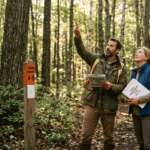
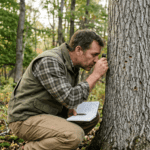
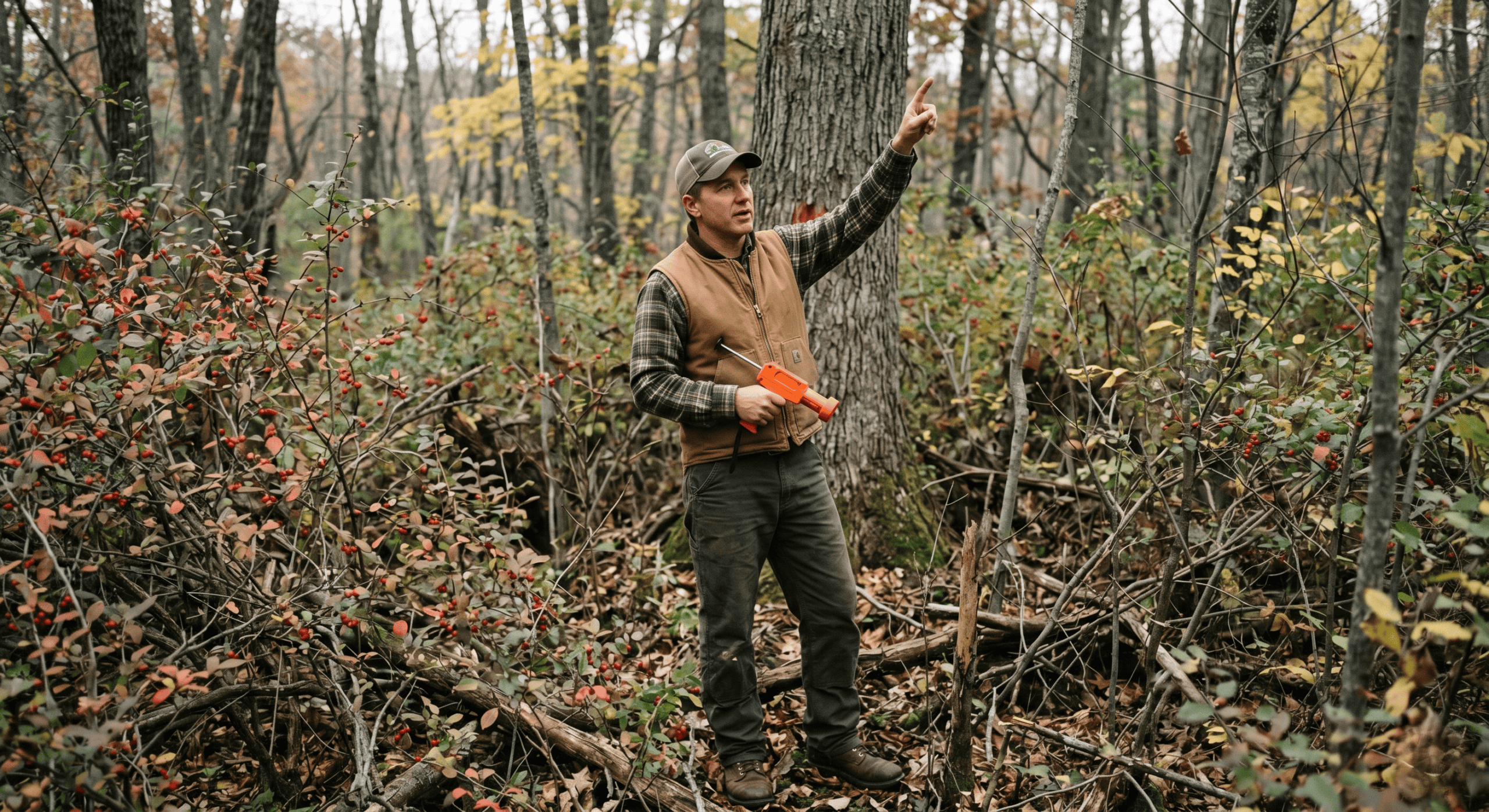
Walk the property systematically before touching anything. Note the dominant species in the canopy. Identify individual trees that appear to have good form — straight, clear boles, well-developed crowns relative to their competition. Note where the understory is cleanest and where it’s most compromised. Note access — where equipment could enter if a harvest becomes part of the plan.
That walk, combined with a forester assessment, tells you what you have and what the priority sequence should be.
What to Look For in a Neglected Woodlot
Three categories of observation produce the information a management plan needs. You don’t need professional training to begin gathering this information — but you do need professional judgment to interpret it and prescribe the right treatments.
Species Composition
What tree species dominate the canopy and understory? In Sullivan, Ulster, and Orange Counties, high-value species include black cherry, red oak, white oak, sugar maple, and yellow birch. Lower-value species that commonly dominate neglected stands include red maple, striped maple, ironwood, and beech root sprout colonies.
A neglected stand dominated by red maple and beech sprouts with scattered cherry and oak buried underneath is a recoverable situation. The high-value species are there — they’re suppressed. TSI work that removes the competition can release them. A stand where the high-value species were harvested out decades ago and only low-value species remain is a different situation requiring a different approach.
Stem Quality and Crown Condition
Look for trees with straight, clear stems — minimal branching on the lower 16 feet, no visible defects, good crown size relative to neighboring trees. Those are your crop trees — the ones worth releasing from competition. Trees with heavy branching low on the stem, significant sweep or crook, visible decay or fungal conks, or narrow suppressed crowns are either management targets or candidates for removal.
For a detailed guide to reading stem quality and crown condition as timber value indicators, see my article on how to know if your timber is valuable.
Understory and Invasive Pressure
The understory condition tells you what’s establishing for the next generation. A clean understory with seedlings of desirable species — oak, cherry, maple — beneath the canopy is a positive sign. A wall-to-wall barberry layer with no native regeneration is a management priority. Beech root sprout colonies crowding everything around them are a consistent problem on unmanaged land throughout the Catskills and Hudson Valley.
Document where invasive pressure is most severe. Those areas compete with your crop trees for resources and regeneration opportunity — and they need treatment before or alongside crop tree release work, not after.
The Priority Sequence — What to Address First
Improving a neglected woodlot works best when treatments follow a specific priority order. Doing things out of sequence wastes effort and money.
First — identify your crop trees. Before cutting anything, mark or note the trees worth releasing. These are the best-formed, highest-value stems in the stand — the ones that, with competition removed, have a realistic path to premium log quality over the next 15 to 20 years. Every subsequent treatment decision should serve those trees.
Second — address immediate forest health threats. If EAB has reached your ash trees and they’re showing crown dieback, those trees need attention now — not after you’ve spent two seasons on TSI work. Ash with early decline symptoms still carry timber value that disappears fast. For the EAB timing picture, see my article on emerald ash borer for NY landowners.
Third — crop tree release. Remove the competing stems that are directly limiting your identified crop trees. Focus on the most direct competition first — the trees whose crowns are in immediate contact with your crop tree crowns. This is the core TSI activity and the one with the clearest return on effort.
Fourth — invasive control. Treat Japanese barberry, multiflora rose, and other invasive shrubs in the areas most important for native regeneration — around crop trees and in areas where you want desirable seedlings to establish. Cut-stump herbicide treatment is the most reliable method for established barberry and multiflora rose. One treatment rarely eliminates the problem. Plan for monitoring and retreatment over two to three seasons.
Fifth — consider a selective harvest. Once the stand has been assessed and the worst competition and health issues are addressed, a well-designed selective harvest can generate income while simultaneously advancing the stand improvement objectives. A harvest that removes low-value competition and mature timber simultaneously is the most economically efficient treatment on many neglected stands. For how selective harvesting works in this context, see my article on selective timber harvesting.
The Primary Tool — Timber Stand Improvement
Timber stand improvement — TSI — is the core treatment for most neglected woodlots. It’s targeted, non-commercial work that removes low-value competition and redirects the stand’s growing capacity toward the trees worth keeping.
TSI doesn’t produce income. You pay for the labor — or do the work yourself on smaller areas. The return comes over the next ten to twenty years in faster diameter growth on released crop trees, improved log quality, and a stand that’s worth significantly more at the next harvest. For the full explanation of what TSI involves and when it makes sense, see my article on timber stand improvement.
What TSI Actually Involves in a Neglected Stand
In a neglected stand, TSI typically addresses several problem types simultaneously. The work isn’t just releasing crop trees — it’s restructuring the entire stand.
Wolf tree removal comes first in many neglected stands. Wolf trees are large, wide-crowned, low-grade trees — often old field remnants or boundary trees that grew unchecked — that shade out everything around them. They occupy enormous growing space and contribute minimal timber value. Removing a wolf tree releases multiple crop trees at once and opens enough canopy to stimulate regeneration below.
Cull tree removal follows. Cull trees are stems with poor form, significant defect, or species composition that won’t produce quality logs regardless of how much growing space they receive. Removing them before they deteriorate further prevents the situation from getting worse and redirects resources to better stems.
Vine cutting — targeting wild grape, Oriental bittersweet, and Virginia creeper that wrap and girdle crop tree crowns — is lower-effort work with high returns on individual trees. A girdled crop tree loses crown function and timber quality. Cutting vines at the base takes minutes per tree and stops the damage immediately.
When a Neglected Woodlot Has Timber Value Worth Salvaging
Not every neglected woodlot is a pure TSI project. Some have merchantable timber — mature trees with enough volume and quality to attract competitive bids — mixed in with the management problems. In those cases, a well-designed selective harvest can be the first treatment, generating income while addressing the worst competition simultaneously.
A forester walking a neglected stand can identify whether merchantable timber is present, whether the volume and quality justify a competitive sale, and whether a harvest prescription can advance the stand improvement objectives rather than working against them. That assessment is worth doing before committing to pure TSI work on a stand that might actually pay for some of its own improvement through a harvest.
The danger in neglected stands is selling timber without a plan. A timber buyer who comes to a neglected stand will offer for whatever is most valuable — usually the best trees — leaving behind exactly the species and stems that were already causing the problem. That outcome makes the stand worse, not better. For the full picture on timber value assessment, see my guide on how to know if your timber is valuable.
How Long Improvement Takes — Realistic Expectations
Woodland improvement is a long game. That said, some results appear faster than most landowners expect.
Invasive shrub die-off after herbicide treatment is visible within one growing season. Vine removal from crop trees shows results in the same season — crowns begin filling out in response to released competition within two to three years. Crop tree crown expansion after release is measurable within three to five years. Diameter growth acceleration on released stems accumulates over ten to twenty years.
Wildlife response is often the fastest visible change. Deer and turkey move toward improved areas — new browse from regenerating stems, better understory structure — within one to two seasons after treatment. For landowners who care about habitat as much as timber, those early results are meaningful and motivating.
A neglected woodlot that has received no attention for 30 years will not transform in one season of work. But one season of well-directed effort — crop tree identification, wolf tree removal, vine cutting, invasive treatment in priority areas — produces visible progress and sets the foundation for compounding improvement in subsequent years.
Frequently Asked Questions
Can I improve my overgrown woodlot myself?
Some of the work is within reach for a motivated landowner — vine cutting, invasive shrub treatment in small areas, and basic cleanup around identified crop trees. Where self-improvement consistently falls short is crop tree identification, wolf tree assessment, and anything involving a chainsaw near merchantable timber. Getting the priorities wrong — releasing the wrong trees, removing stems that should stay — produces effort without the right result. A forester walk-through that marks your crop trees and identifies the priority sequence makes your own subsequent labor far more effective.
Is a neglected woodlot worth managing if the timber is mostly low-value species?
It depends on what’s underneath the low-value canopy. Many neglected stands dominated by red maple and beech have suppressed cherry, oak, and maple below — species that will express real timber value if given growing room over the next fifteen years. A forester walk that identifies those buried high-value stems often reveals more potential than the surface view suggests. If the stand genuinely has no high-value species present at any layer, the management conversation shifts to 480-a eligibility, wildlife habitat improvement, and long-term species composition goals — not timber income. Even those stands benefit from active management.
How do I know if my neglected woodlot qualifies for 480-a enrollment?
A neglected woodlot can qualify for 480-a enrollment as long as it meets the four program requirements: 50 or more contiguous acres of productive forest land, capable of growing commercial timber, with a licensed forester management plan approved by NYSDEC and a landowner commitment to active management. Neglect alone doesn’t disqualify a property — it just means the management plan will prescribe more intensive improvement work in the early years of the enrollment period. For the full qualification framework, see my article on forest stewardship and 480-a tax savings.
How Environmental Forest Products Can Help
I’ve been assessing and improving neglected woodlots across Sullivan, Ulster, and Orange Counties for over 30 years. The stands that seem most discouraging on a first walk are often the ones with the most recoverable potential — once you know where to look and what to address first.
Here’s what I can do for a neglected or overgrown woodlot:
- Walk the stand and give you an honest assessment of what’s recoverable and what the realistic improvement timeline looks like
- Identify and mark crop trees for release — so your own labor or hired treatment work goes toward the right stems
- Write a TSI prescription covering priority areas, treatment methods, and sequencing
- Assess whether merchantable timber is present and whether a selective harvest should precede or accompany TSI work
- Evaluate 480-a enrollment eligibility and write a management plan if the property qualifies
- Advise on invasive species treatment approach and monitoring for priority areas
If you have a neglected woodlot in Sullivan, Ulster, or Orange County that you’re not sure what to do with, a property walk is the right starting point. That walk costs far less than a season of misdirected work.
Request a Free Neglected Woodlot Assessment
Call me directly: (845) 754-8242
Email: henry@eforestproducts.com
Serving Sullivan County NY, Ulster County NY, Orange County NY, Pike County PA, Wayne County PA, and Sussex County NJ.
Henry Kowalec is a licensed consulting forester and member of the Society of American Foresters with over 30 years serving private landowners in the Hudson Valley and Catskills. Environmental Forest Products | Westbrookville, NY 12785 | Licensed in NY, PA, NJ.