Inheriting wooded land is not like inheriting a bank account. A bank account sits there. A woodlot has problems that develop, opportunities that close, and buyers who will find you before you find them. The first 90 days after inheriting wooded property are when most costly mistakes happen — and almost all of them happen because the new landowner didn’t know what they had before someone with a checkbook told them.
I’ve worked with inherited-land situations across Sullivan, Ulster, and Orange Counties for over 30 years. The pattern is consistent. New landowners who act fast — responding to timber buyers, agreeing to logging operations, making disposal decisions before they understand the asset — often regret it. Those who take 60 to 90 days to get oriented first make far better decisions and keep far more of what the land is worth.
Here’s exactly what to do — and in what order — if you’ve just inherited wooded land in New York.
Stop — Before You Do Anything Else
Do not respond to any timber buyer or logging company until you understand what you own. Do not sign any agreements, grant any access, or make any decisions about selling timber or the land itself until you have independent information about what that timber and land are actually worth.
This isn’t a legal warning. It’s practical advice from watching people leave tens of thousands of dollars on the table because they didn’t know what they had. A timber buyer who contacts you in the first weeks after an inheritance is not there to help you through a difficult time. He’s there because he heard the property changed hands and he wants to price your timber before you know its value.
The trees aren’t going anywhere. The timber that grew for 40 years will still be there next month. Give yourself time to get oriented before anyone with a financial interest in your decision gets your ear.
Step One: Understand What You Now Own
Walk the Property
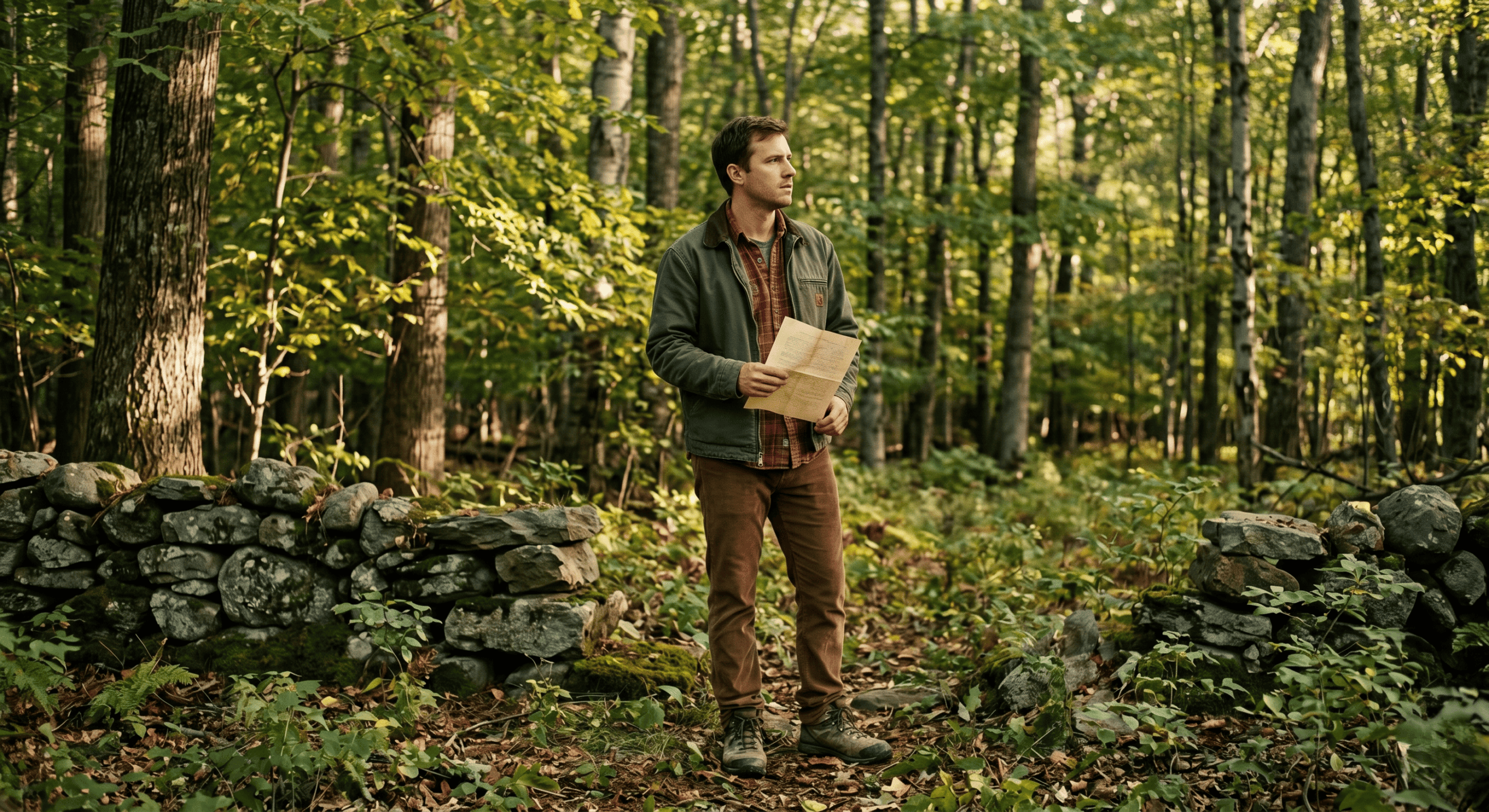
Before any professional engagement, walk the land. Walk it more than once. You are building a baseline picture of what you’ve inherited — and that picture makes every subsequent conversation more useful.
You don’t need forestry knowledge to do this. Look for the big things: what tree species seem dominant, whether the canopy is dense and closed or more open and varied, whether the understory is clean or choked with shrubs, where the wet areas and stream crossings are, and where the property can be accessed by vehicle.
Note anything unusual — recent stumps from prior cutting, evidence of storm damage, dead standing trees with woodpecker activity (a possible sign of emerald ash borer), or areas where shrubby invasive plants have taken over the forest floor. These observations don’t need to be technical. They give a forester useful context when you do bring one in.
For a more detailed guide to what to look for on a first management walk, see my article on forest land management for beginners.
Find Any Existing Documents
Before spending money on anything, search the estate records for existing documents about the property. Specifically, look for:
- A forest management plan — if the prior owner enrolled in 480-a, a plan exists. That plan tells you the stand conditions as of its last update and what management activities were prescribed. It also tells you whether the 480-a enrollment is still active and whether prescribed activities are current.
- Prior timber sale contracts — these tell you when the property was last harvested, what species were cut, and what the buyer paid. That history matters for understanding current stand condition.
- Tax records showing 480-a enrollment — if the property is currently enrolled, the tax bill will show the reduced assessment. Enrollment transfers with the property under certain conditions, but you need to notify NYSDEC of the ownership change.
- Survey maps and deeds — boundary clarity is important before any management or sale decision. Disputed boundaries complicate timber sales and any future transaction.
The Timber Buyer Problem — Why They Call So Fast
Real estate transfers are public records. Timber buyers and logging companies monitor those records in counties with active timber markets — which includes Sullivan, Ulster, and Orange Counties. When a property with significant timber acreage changes hands through an estate, buyers often reach out within weeks.
This isn’t sinister. It’s how the timber market works. But it creates a specific risk for new landowners who haven’t yet had time to understand what they own. A buyer’s offer is not an appraisal. It’s a price that works for his operation. He knows what your timber is worth. You don’t. That information gap is what he’s counting on.
A buyer might tell you the timber is overmature and needs to come out now. He might tell you the market is unusually strong right now and won’t last. He might offer a lump sum that sounds substantial before you know what the timber actually cruises out at. All of these are real sales techniques — not necessarily dishonest, but designed to move you toward a decision before you have the information to evaluate it.
The solution is simple: don’t respond until you have an independent appraisal. For a full explanation of how timber buyers operate and why consulting forester representation matters, see my article on timber buyers vs. consulting foresters.
Step Two: Get an Independent Timber Appraisal
If your inherited property has meaningful timber acreage — generally 20 or more acres of wooded land with mature trees — an independent timber appraisal is your most important early investment. It tells you what you actually have before anyone else tells you what they’ll pay for it.
A timber appraisal by a licensed consulting forester produces a written report covering the species present on your property, the volume of merchantable timber, the quality or grade of that timber, and the estimated stumpage value at current market prices. That report is your negotiating baseline for any sale conversation — and it’s the document that tells you whether an offer you’ve received is fair, low, or well below market.
Timber appraisals also have uses beyond a timber sale. For estate settlement purposes, a professional timber appraisal documents the timber asset value at a specific date. That documentation matters for estate tax purposes and for equitable distribution among heirs if more than one person inherited the property.
For the full picture on how timber value works and what drives it, see my guide on how much timber is worth. For what a timber appraisal involves specifically, see my article on how to get a timber appraisal.
Step Three: Understand Your Tax Situation
Property Taxes on Inherited Woodland
Inherited woodland in New York is subject to standard property taxes based on assessed value — unless the property is enrolled in a tax reduction program. The tax situation you inherit depends on what the prior owner had in place.
If the prior owner was enrolled in 480-a, the reduced assessment may continue — but only if you notify NYSDEC of the ownership change and commit to continuing the management plan. Failing to notify NYSDEC of an ownership transfer can put the enrollment at risk and trigger back-tax liability.
If the prior owner was not enrolled in 480-a, you’re paying full assessed value on the woodland. On a 100-acre property in Sullivan County assessed at $2,000 per acre, that’s taxes on $200,000 of assessed value. Enrollment in 480-a could reduce that to $40,000 — a difference of several thousand dollars per year.
The 480-a Opportunity You May Be Missing
If your inherited property has 50 or more contiguous acres of productive forest land, 480-a enrollment is one of the highest-return decisions available to you as a new landowner. The program reduces assessed value by up to 80%. It requires a forest management plan written by a licensed forester and an approved NYSDEC application.
New owners of inherited woodland can apply for 480-a enrollment. The prior owner’s non-enrollment does not disqualify you. Get the management plan written, submit the application, and begin capturing the annual tax savings. Every year you delay is a year of savings you cannot recover.
For how 480-a fits into the full financial picture of woodland ownership, see my article on how to make money from wooded land. Current program requirements are at dec.ny.gov.
Step Four: Decide What You Want to Do With the Land
Once you understand what you have — through a property walk, a review of existing documents, and an independent appraisal — you’re in a position to decide what you actually want to do with the property. That decision deserves real thought, and it doesn’t need to be made in the first 90 days.
The realistic options for inherited woodland fall into a few categories:
- Keep and actively manage — enroll in 480-a, develop a management plan, pursue timber income over time, and manage for wildlife habitat or other personal goals. This is the option that builds long-term asset value.
- Keep and passively hold — pay the taxes, do minimal management, and revisit the decision later. This is a legitimate choice if you’re not ready to engage. It does, however, mean continued full property tax liability and ongoing loss of management opportunity.
- Sell the timber before selling the land — capture the timber value through a properly managed sale before selling the underlying property. This maximizes total return if selling the land is ultimately the goal.
- Sell the land outright — a full property sale to another landowner, a developer, or a conservation buyer. Timber value affects land value, so an appraisal is useful here regardless.
- Conservation easement — place a permanent restriction on development in exchange for payment from a land trust or government program, while retaining ownership and possibly timber harvesting rights.
None of these decisions should happen before you understand what you own. Each option has different tax implications, different financial outcomes, and different timelines. A forester can advise on the management and timber-related dimensions. An attorney and a tax advisor should weigh in on the legal and estate tax dimensions before any major decision.
Step Five: Get a Forest Management Plan
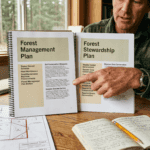
If you decide to keep the property — for any reason, for any duration — a forest management plan is the right next step. It gives you a clear picture of what you have, what it needs, and what sequence of management activities makes sense over the next ten years.
A management plan also qualifies your property for 480-a enrollment — which is the fastest way to reduce your ongoing property tax liability. The plan cost is typically recovered in the first year or two of 480-a savings. After that, every year of enrollment is pure savings.
For a complete explanation of what a forest management plan contains and what the process looks like, see my guide on what a forest stewardship plan is.
What Happens If You Want to Sell the Land — Not Just the Timber
Selling inherited woodland is a legitimate choice. It is not, however, a decision that should happen without understanding the timber value component of the land’s worth.
Timber value is a component of raw land value. Buyers of wooded land — whether individuals, developers, or conservation organizations — factor timber into what they’ll pay. If you sell before getting an independent appraisal, you’re negotiating the land’s value without knowing a major component of it.
A well-timed timber sale before selling the land can also increase net proceeds. Selling the standing timber separately — through a competitive bid process managed by a consulting forester — captures the timber value directly. The underlying land then sells without the timber component priced into it by the buyer. That sequencing often produces better total returns than selling the land with timber standing.
This is a transaction strategy worth discussing with both a consulting forester and a real estate attorney before committing to any approach.
Frequently Asked Questions
A timber buyer contacted me about my inherited land. Should I respond?
Not until you have an independent appraisal of your timber. A buyer’s offer is a price that works for his operation — not a valuation of what your timber is worth. Real estate transfers are public records, and timber buyers actively monitor them in counties with active markets. This is standard practice, not predatory behavior, but it creates real risk for new landowners who don’t yet know what they have. Get a forester walk and an independent appraisal first. Then you can respond from a position of information rather than urgency.
How do I find out what my inherited woodland is worth?
Two separate valuations matter: the timber value and the land value. A licensed consulting forester produces a timber appraisal — a written report covering species, volume, grade, and stumpage value at current market prices. A licensed real estate appraiser produces a land value appraisal. Both are useful for estate settlement, for evaluating sale offers, and for any decision about what to do with the property. Start with the timber appraisal, since timber value affects land value and the forester’s assessment gives you immediately actionable information about the asset you’ve just acquired.
Can I enroll inherited woodland in New York’s 480-a program?
Yes. New owners of inherited woodland can apply for 480-a enrollment regardless of whether the prior owner participated. If the prior owner was enrolled, notify NYSDEC of the ownership change immediately to preserve the existing enrollment. If the prior owner was not enrolled, you can apply from scratch — you need 50 or more contiguous acres and a forest management plan written by a licensed forester. Every year you delay enrollment is a year of tax savings you cannot recover retroactively.
How Environmental Forest Products Can Help
Inherited land situations are some of the most time-sensitive cases I handle. New landowners face real decisions — often under emotional and financial pressure — without the information they need to make them well. My job is to give them that information quickly and clearly.
Here’s what I can do for a new inherited-land owner:
- Walk the property with you and give you a plain-language assessment of what you’ve inherited — species composition, timber quality, stand condition, and any urgent forest health issues
- Conduct a timber cruise and written appraisal so you know what your timber is worth before any buyer conversation
- Review any existing 480-a enrollment or management plan and advise on what steps you need to take to maintain or establish enrollment
- Write a forest management plan that qualifies the property for 480-a enrollment and reduces your ongoing property tax liability
- Manage a timber sale — tree marking, competitive bids, contract writing, harvest oversight — if a sale is the right next step
- Advise on sequencing decisions: whether to sell timber before selling land, whether to pursue a conservation easement, or whether active management makes the most sense for your situation
If you’ve recently inherited wooded land in Sullivan, Ulster, or Orange County and you’re not sure what you have or what to do with it, call me before you make any other decisions. That first conversation costs nothing and gives you the information foundation you need.
Request a Free Inherited Land Consultation
Call me directly: (845) 754-8242
Email: henry@eforestproducts.com
Serving Sullivan County NY, Ulster County NY, Orange County NY, Pike County PA, Wayne County PA, and Sussex County NJ.
Henry Kowalec is a licensed consulting forester and member of the Society of American Foresters with over 30 years serving private landowners in the Hudson Valley and Catskills. Environmental Forest Products | Westbrookville, NY 12785 | Licensed in NY, PA, NJ.